Commercial Sky Cycle Design & Installation in India

Commercial Sky Cycle Design & Installation in India

Balance-based aerial cycling that almost anyone can ride — engineered to IS 456 / IS 800 structural codes. OXO Planet has delivered sky cycles across India and Nepal since 2019, including the world's largest, a 370 m line in Kathmandu.

Last updated: August 2026

What It Is & Why It Matters

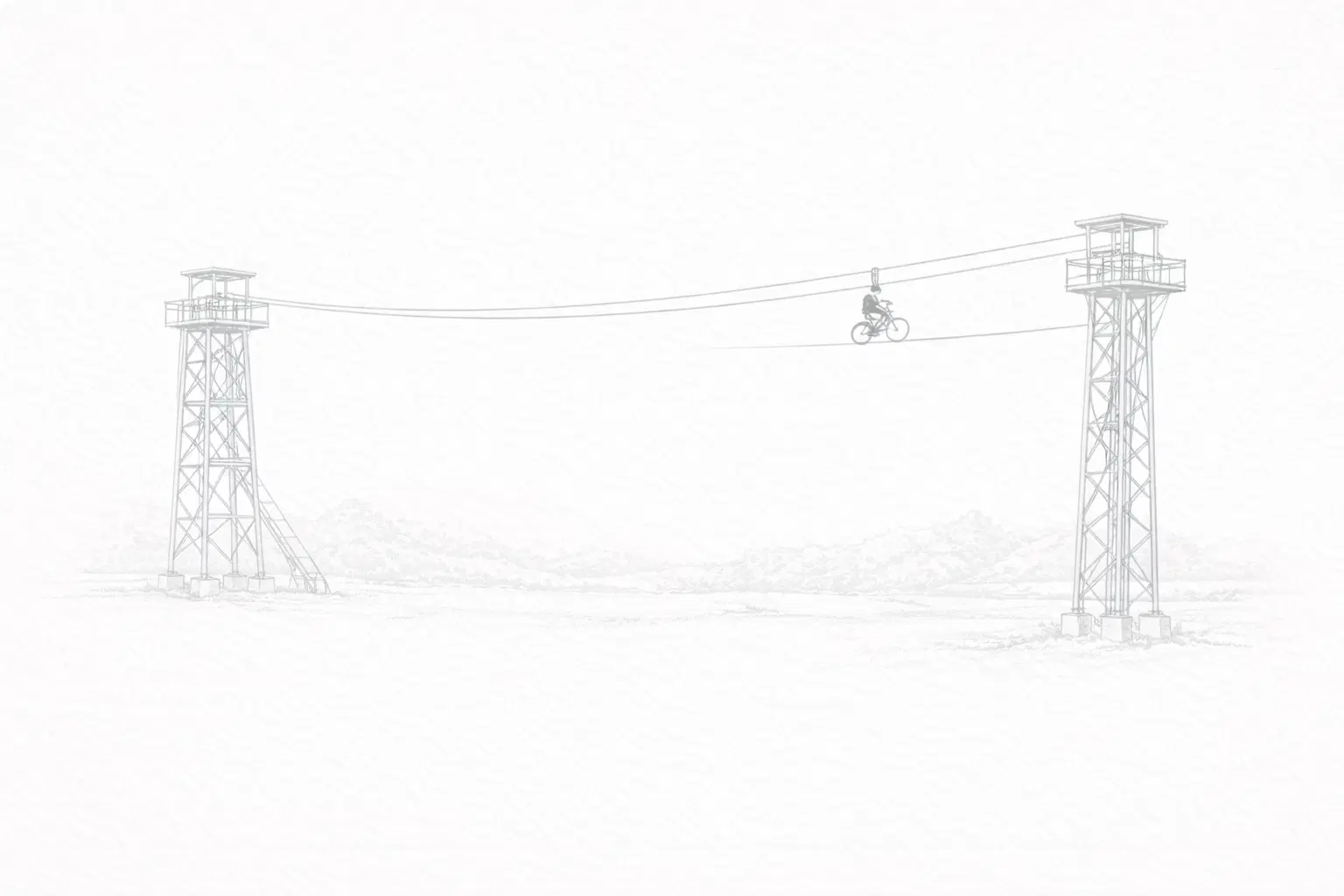
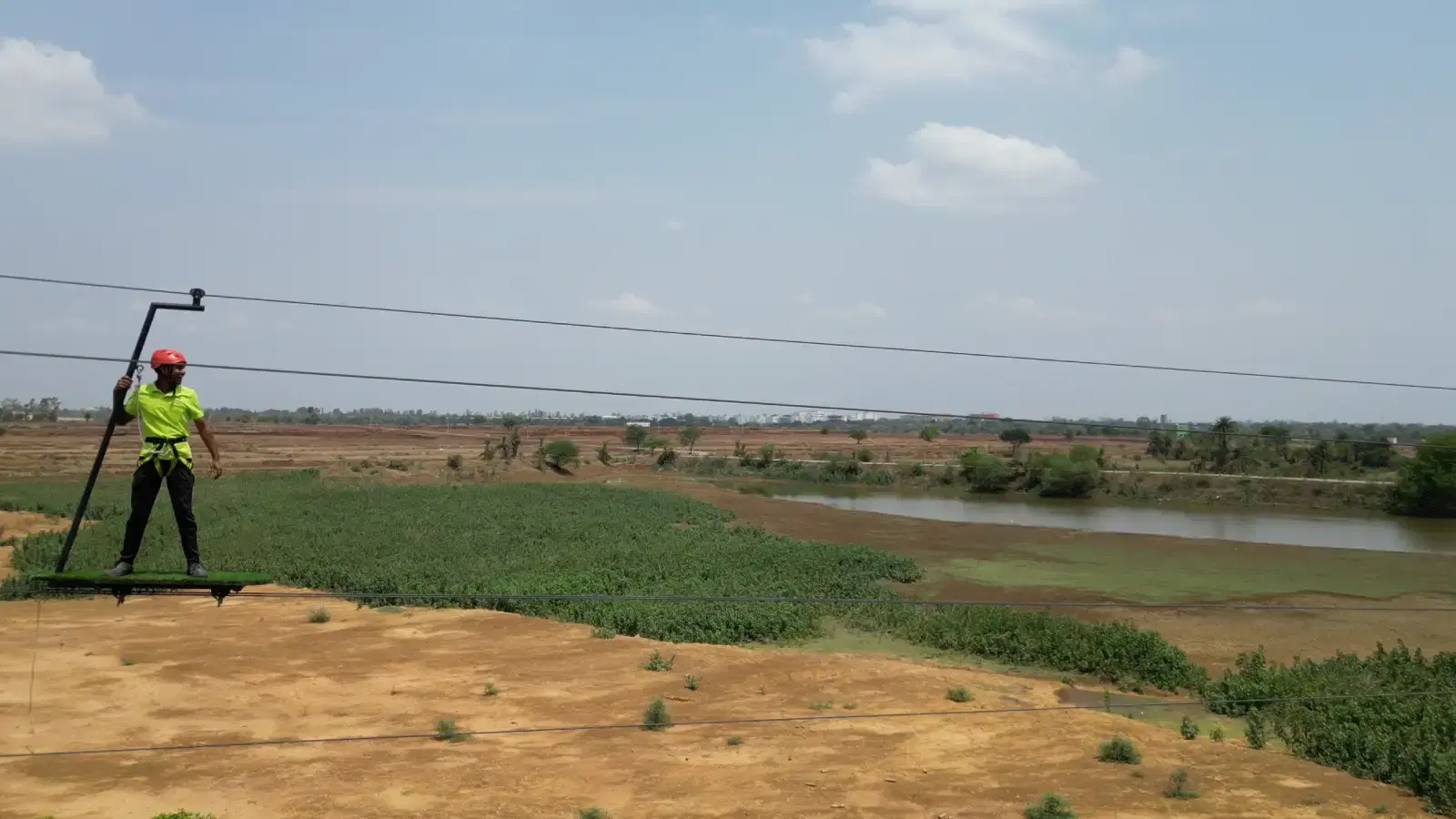
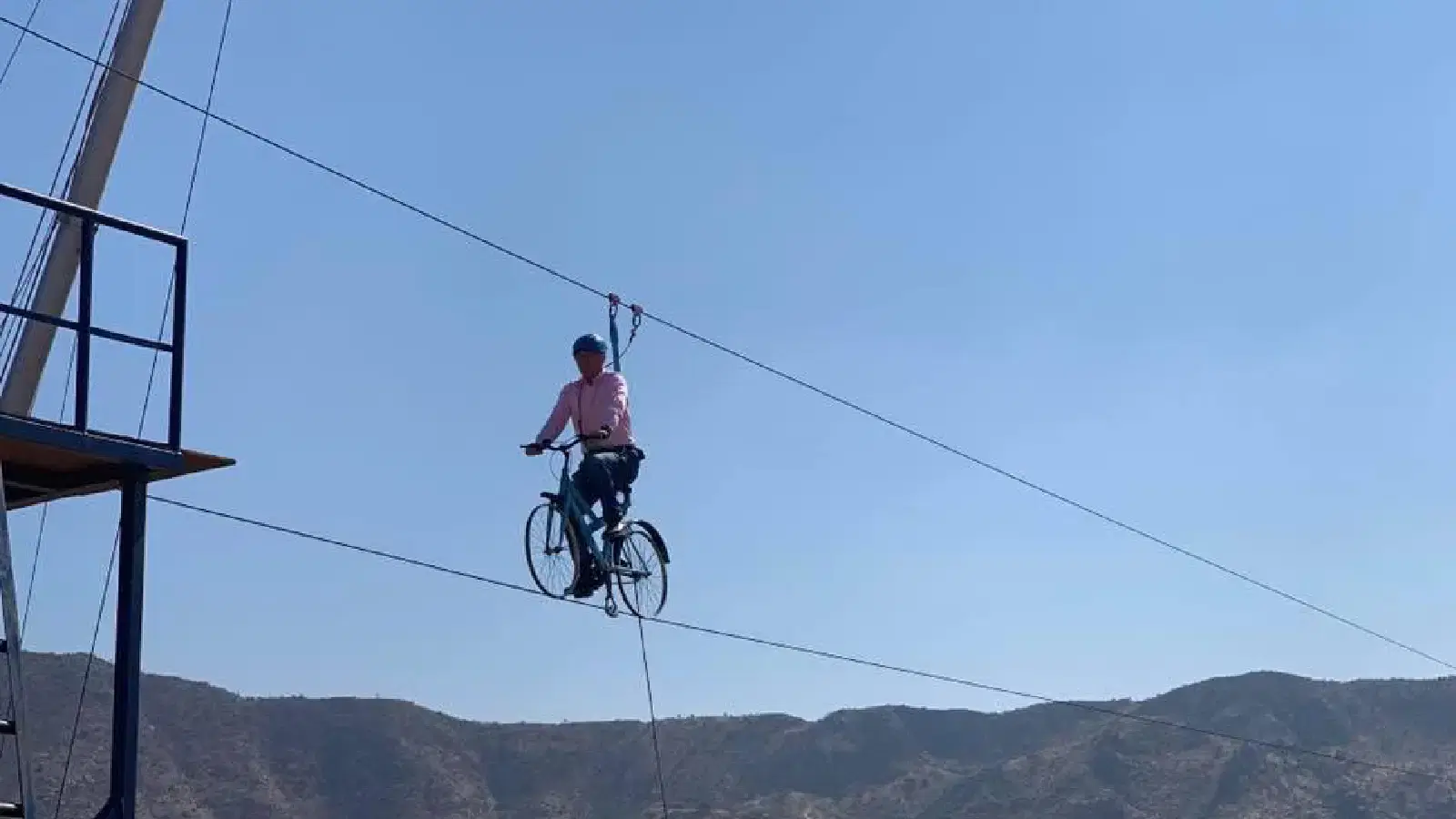
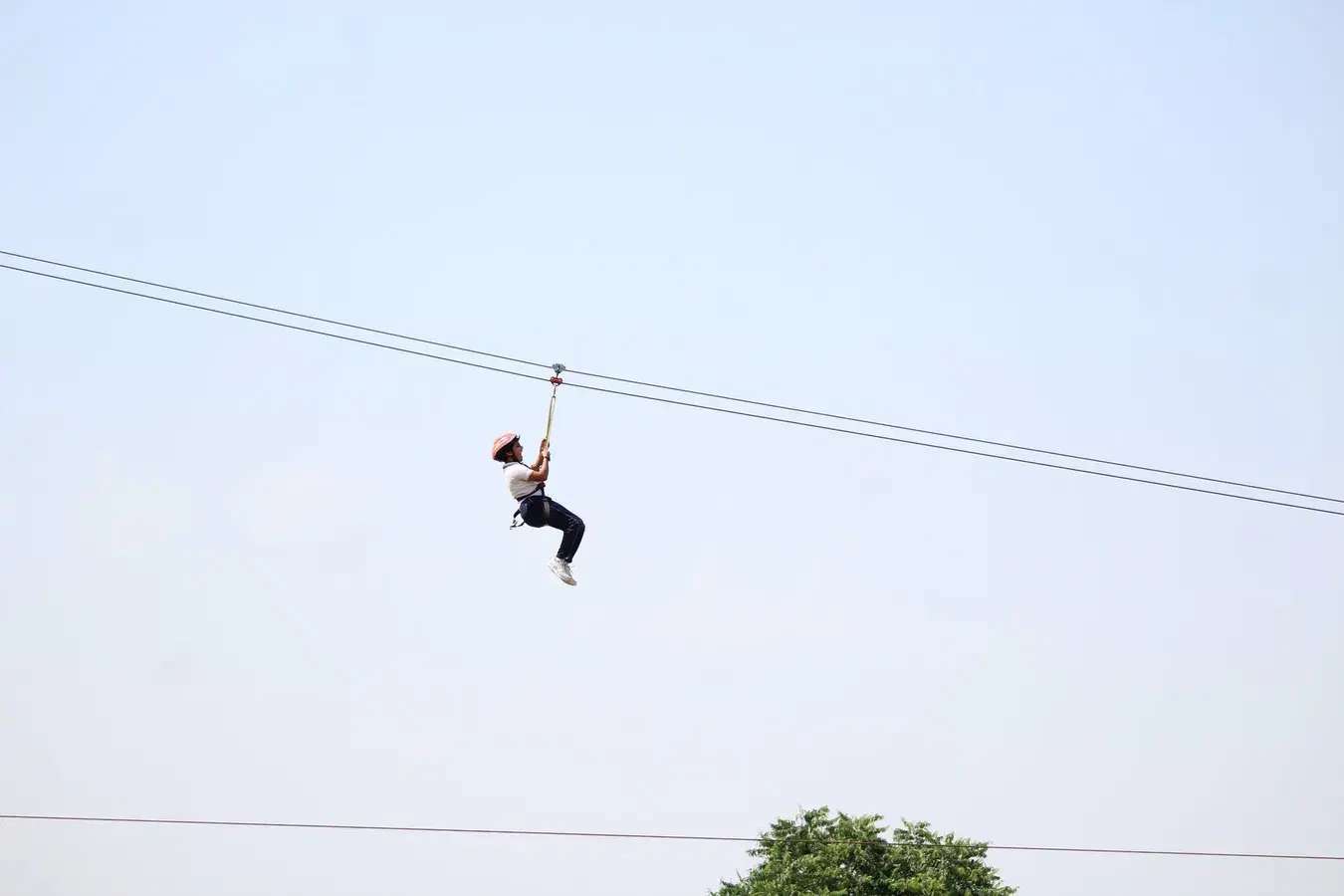
A sky cycle is an elevated ride in which a rider pedals a cycle mounted on a tensioned overhead cable or rail between two towers, typically 100–150 m apart. The rider provides the propulsion; the structure carries the load and controls the ride — which is what makes it one of the most inclusive aerial attractions available, with low perceived risk and high completion rates across mixed-age and family audiences.

It is also one of the most photographed attractions a destination can install — a rider suspended in open air, in full view of everyone on the ground — while running almost entirely on rider effort rather than power. OXO Planet has delivered sky cycles across India and Nepal since 2019, from resort and school installations to the world's largest single span, a 370 m line at YOYO Adventure Park in Kathmandu.

OXO Sky Cycles — By the Numbers

370 m
World's largest sky cycle (YOYO Adventure Park, Kathmandu).
7 states + Nepal
Sky cycles built across India and Nepal.
85+ project sites · 300+ activities
OXO Planet's track record across 85+ project sites in 25 states & UTs, India and Nepal.

Key Business Outcomes

  • Wide audience appeal including first-time and hesitant users
  • High completion rates reducing operational bottlenecks
  • Low operator intervention compared to high-thrill rides
  • Excellent fit for family parks, resorts, and urban attractions
  • Reliable throughput with predictable ride cycles
Sky Cycle

Where This Works Best?

Family Adventure Parks
Inclusive aerial experiences with broad demographic appeal
Resorts & Leisure Destinations
Scenic routes encouraging relaxed participation
Institutional Campuses
Low-intensity aerial challenges suitable for varied age groups
Urban Attractions
Balance-based experiences with controlled risk perception

Types of Sky Cycle Configurations

Single-Track Sky Cycle
One continuous elevated track with a single rider path. Most common format for linear layouts in parks and resorts.
Dual-Track Sky Cycle
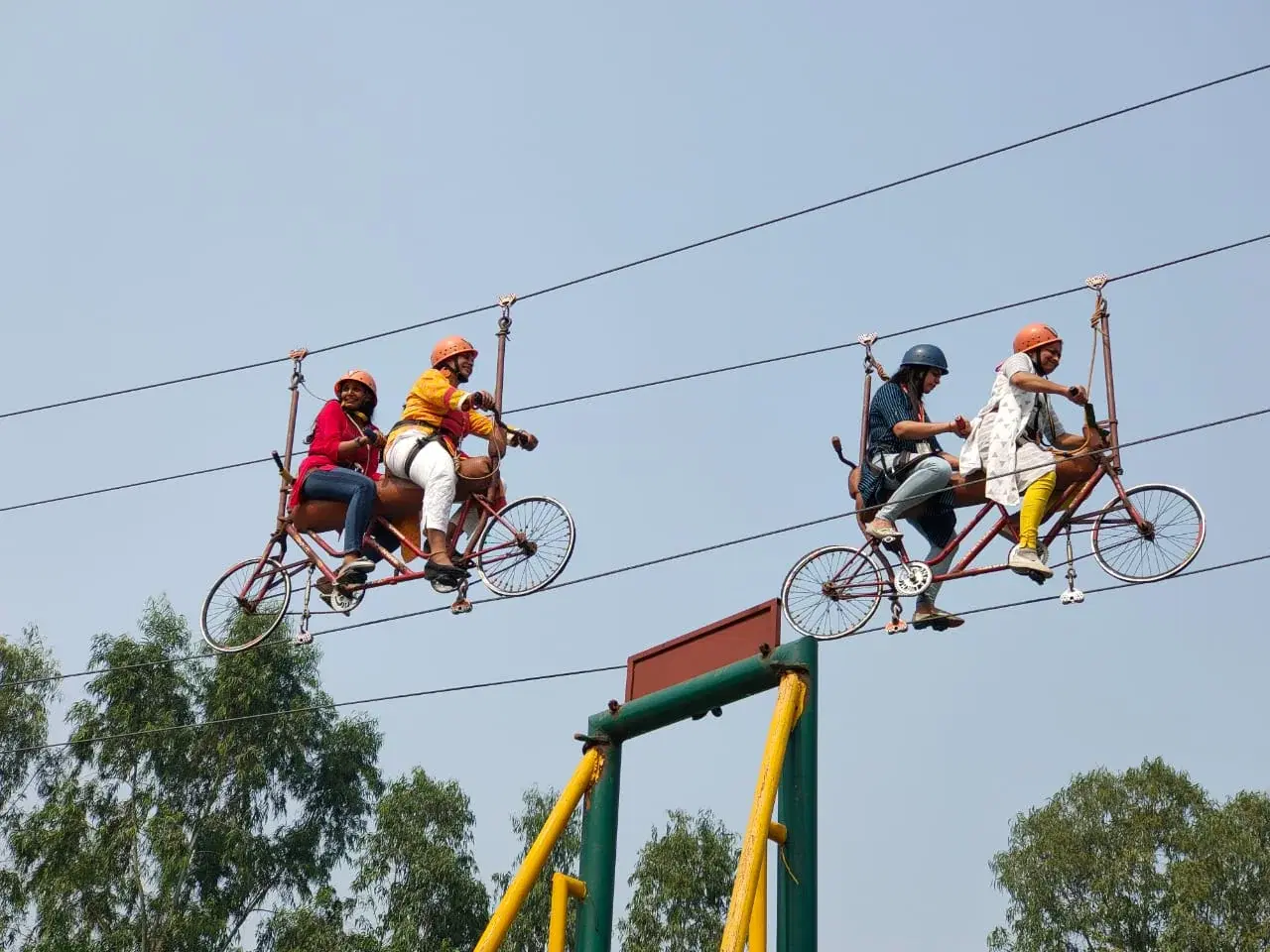
Two parallel tracks allowing simultaneous riders. Increases throughput and adds a competitive or social element.
Loop or Circuit Layout
Closed-loop track returning riders to the start point. Ideal for compact sites and operations without end-point staffing.
Terrain-Following Layout
Track follows the natural contours of a hillside or landscape. Maximises scenic value and minimises structural intervention.

Engineering & Core Components

Sky Cycle
Ride Track Structural Design
Sky cycle tracks are engineered to IS 800 to control cable tension and mid-span deflection, so pedalling effort stays consistent and the rider never bottoms out — the core challenge that made our 370 m Kathmandu line the world's largest.
Cycle & Track Interface Engineering
Cycle units, wheel assemblies and guide mechanisms are integrated for smooth, self-driven motion, with a controlled track camber so riders complete the crossing without stalling mid-span.
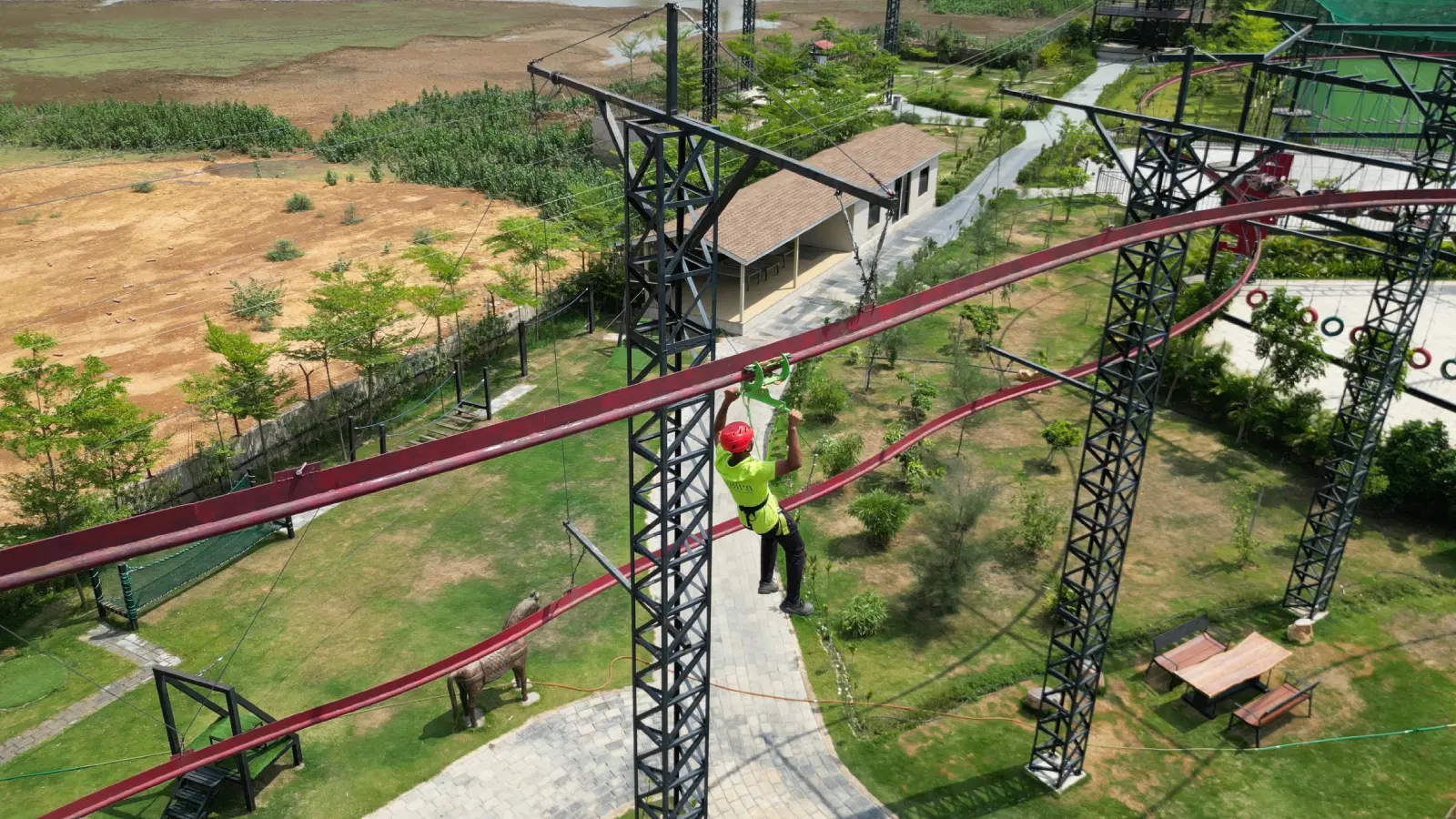
Support Structure & Elevation Systems
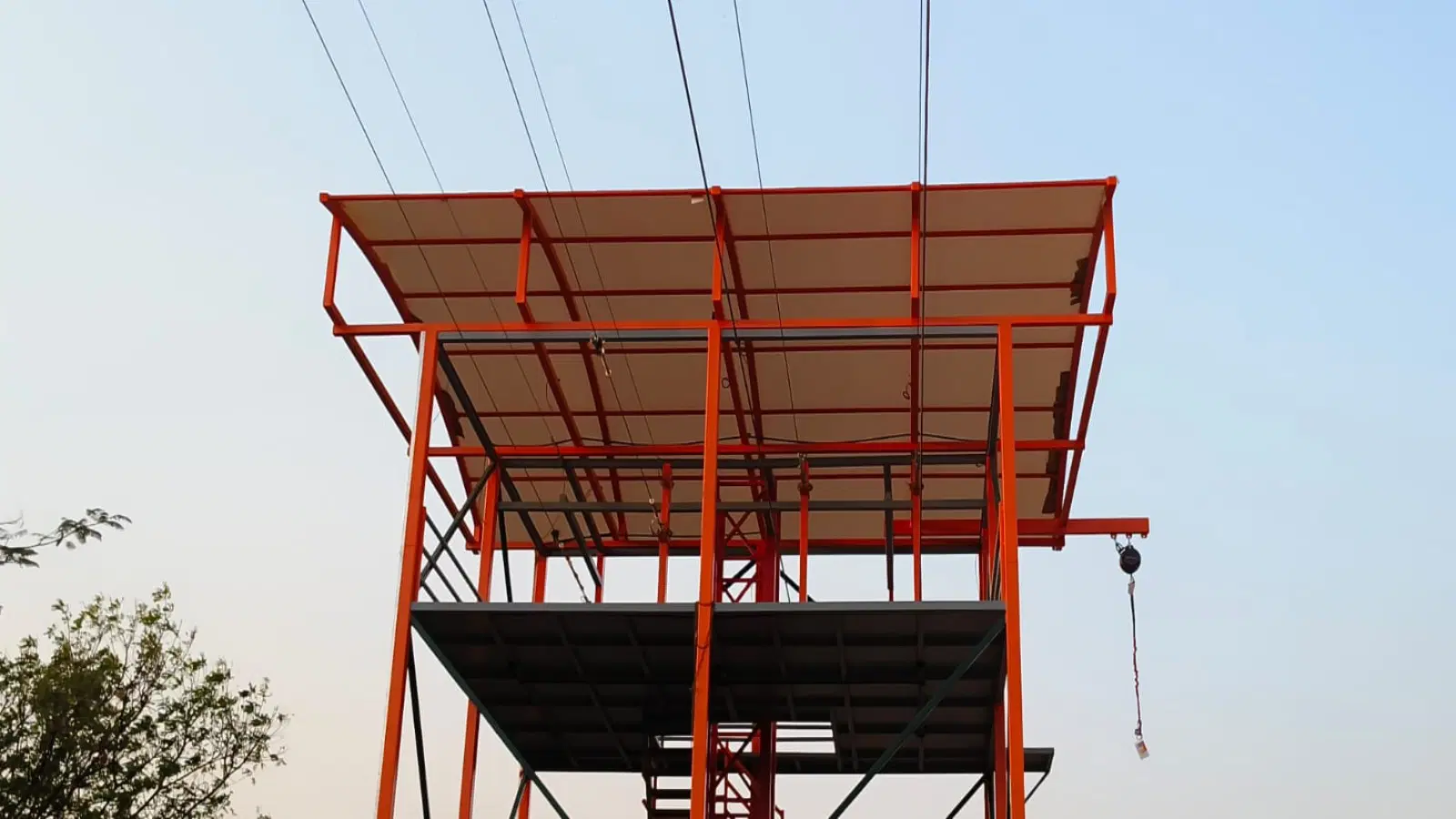
Towers and frames are engineered to IS 800 with RCC foundations to IS 456, sized to the site. At Panambur Beach we drove pile foundations roughly 10 m deep to reach the stability the coastal ground could not give on its own.
Rider Safety Integration
Harnesses, handhold systems, and containment arrangements are incorporated to ensure secure rider positioning throughout the experience.
Access Platform & Dispatch Design
Entry platforms are engineered for safe mounting, controlled dispatch, and efficient operator supervision.
Operational Recovery & Turnaround Planning
End-point handling, cycle return logic, and operator interface zones are designed to support repeatable and efficient operations.

Safety as a System

Redundant Rider Safety Integration
Sky cycle systems are designed so that rider containment, track guidance, and support structures work together conservatively to maintain secure participation at height.
Daily Track, Cycle & Connection Checks
Tracks, wheel assemblies, cycle units, harnesses, and fixing points are inspected before operations to verify alignment, wear condition, and safe functionality.
Controlled Dispatch & Spacing
Ride entry, rider spacing, and recovery are handled through operator-led procedures to maintain safe separation and smooth throughput.
Clear Rider Briefing Protocols
Participants are given simple and direct instructions on posture, pedalling behaviour, and movement control before entering the ride.
Operator-Led Recovery Readiness
End-point handling and emergency response procedures are designed to be practical, manual, and executable within the site's operating conditions.
Projects We've Delivered
Implemented across adventure parks, resorts, and institutional recreation projects in India.

Indicative Sky Cycle Installation Cost in India (2026)

  • 100 m Sky Cycle~₹15 lakh
  • 150 m Sky Cycle~₹20 lakh
  • 200 m Sky Cycle~₹24 lakh
  • 300 m Sky Cycle~₹32 lakh
  • Two cost components make up the figures above: the support towers (~₹8–15 lakh depending on span and length) and the technical setup — the running rail at about ₹4,500 per metre plus trolley-cycle kits at about ₹12,000 per kit.
  • A tandem or parallel (dual-line) configuration adds roughly +50% over a single line.
  • GST extra; civil and foundation work, sheds and site development are quoted separately.
  • Span length, ground conditions and single, tandem or parallel-line configuration drive the final cost.
  • Typical timeline is 4–6 weeks from order to on-site commissioning; the final price follows a site assessment.
Planning a Sky Cycle? Let's Talk.
Share your site details and we'll help you assess feasibility, layout options, and indicative costs — at no obligation.

Where We've Built Sky Cycles

OXO Planet has designed and installed sky cycle systems — also known as zip cycles, rope cycles and aerial cycling rides — across resorts, adventure parks, school campuses and coastal destinations in India and Nepal, from compact tower-mounted setups to long-span scenic routes and the world's largest 370 m line.

India — Sky cycles across farm resorts, school campuses and multi-activity towers in multiple states, including India's largest in-campus adventure park at Sreenidhi International School, Hyderabad, and a beachside multi-activity tower at Panambur, Mangalore.

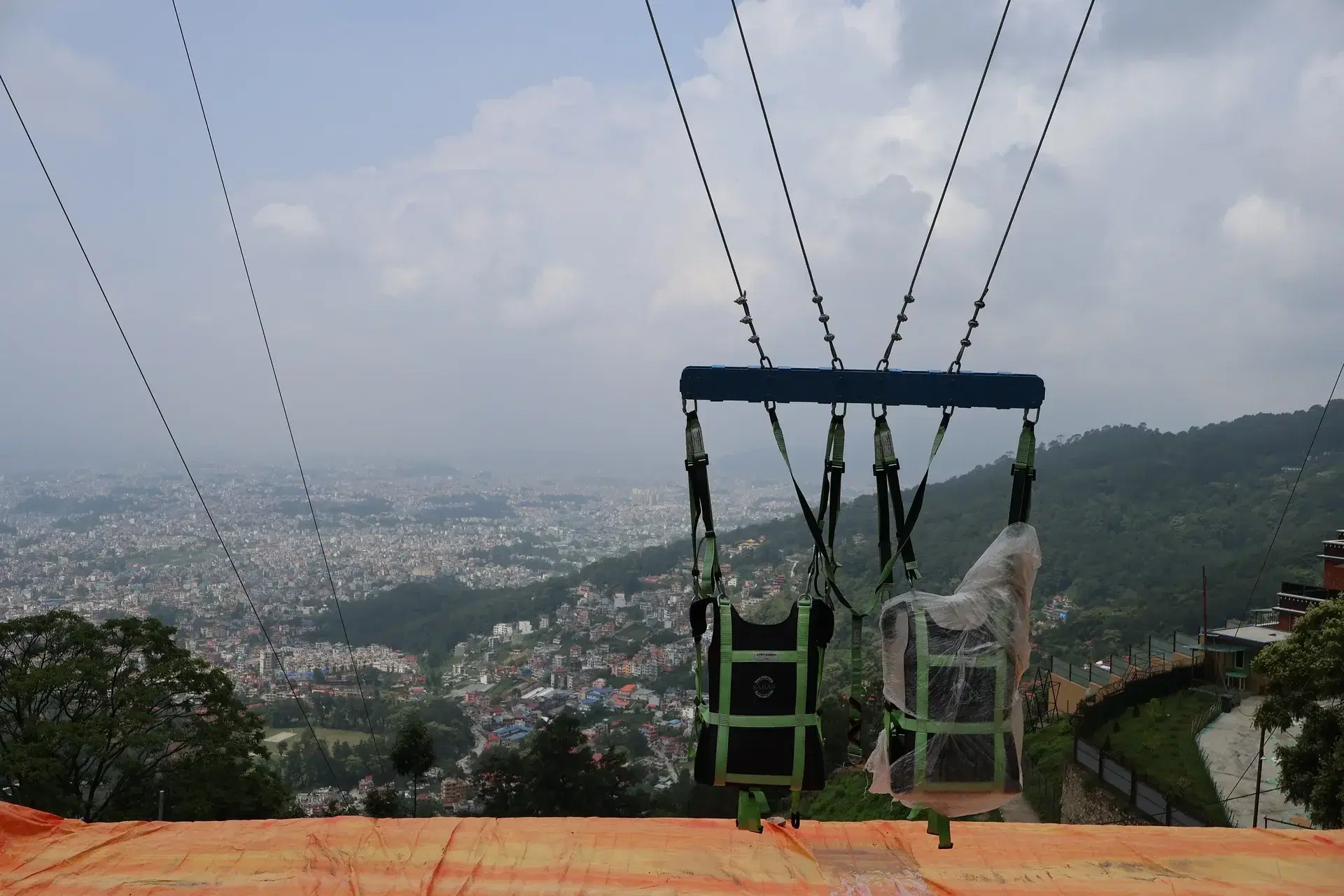
Nepal — Home to the world's largest sky cycle, a 370 m span at YOYO Adventure Park, Kathmandu, plus a 9-activity tower for the Choudhary Group.

Featured Projects

"OXO engineered our sky cycle right on the beachfront, on 10-metre pile foundations. It's become the signature ride at Panambur."Teammanthras, Panambur Beach

FAQs on Sky Cycle Setup

How much space is required to install a sky cycle in India?
A sky cycle needs a straight corridor the length of the span — usually 100 to 150 metres between towers — and roughly 3 metres wide, plus clearance at each launch and landing tower. Natural elevation helps but isn't required; on flat ground, engineered towers create the height. Final requirements are confirmed after a site and structural assessment.
Can a sky cycle be installed on flat land or does it require elevation?

Yes, sky cycles can be installed on flat land using engineered support towers to create the required height. Natural elevation is an advantage but not a requirement. Site conditions and visual intent determine the final structural approach.

What approvals or permissions are required for a sky cycle in India?

There is no single national approval for sky cycle installations in India. Projects typically require local municipal permissions, landowner consent, and internal safety approvals. Additional permissions may apply for public or institutional sites depending on state regulations.

Is a sky cycle safe for public use in Indian conditions?

Yes, sky cycles are safe for public use in India when designed conservatively and operated with disciplined procedures. Safety depends on robust structural design, secure track and harness systems, routine inspections, and trained operators.

Can sky cycles operate year-round in Indian weather conditions?

Most sky cycles in India can operate for the majority of the year. Outdoor operations may pause during heavy rain or high winds. Operating thresholds and weather guidelines are defined during the planning and handover stage.

What kind of maintenance does a sky cycle require?

Sky cycle maintenance involves regular inspection of track systems, support structures, bicycles, wheel bearings, and safety harnesses. Moving components require consistent monitoring and periodic servicing at defined intervals to ensure continued safety and smooth operation.

Who can operate and manage a sky cycle on a daily basis?

Sky cycles are operated by trained on-site staff without requiring a specialised engineering background. Operators are trained in rider briefing, dispatch control, ride monitoring, end-point handling, and emergency response procedures.

What factors should be considered while planning a sky cycle project in India?

Key planning factors include available footprint, height clearance, rider capacity targets, structural feasibility, terrain type, staffing capability, and long-term maintenance planning. Early alignment on these factors determines the viability and cost of the installation.

How much does a sky cycle cost in India?
Indicatively around ₹15 lakh for a 100 m line and ₹24 lakh for a 200 m line, covering both the structural work (foundations and towers) and the technical setup (cable/rail, trolley cycles, braking and safety systems). GST is extra and site development is excluded. Final cost depends on span, ground conditions and whether the ride is single, tandem or a parallel-line configuration.
How many riders per hour can a sky cycle handle?
A single line typically handles 30 to 40 riders per hour. A parallel dual-line configuration roughly doubles that on the same footprint.
How long does it take to install a sky cycle?
A typical sky cycle takes about 6 to 8 weeks from design sign-off to commissioning, depending on span, site access and ground conditions.
What are the rider requirements for a sky cycle?
Riders should be at least 6 years old, a minimum of 4 ft tall and under 120 kg, with a basic level of fitness — the ride is self-propelled and involves pedalling across the span.
What is the longest sky cycle OXO has built?
OXO Planet built the world's largest sky cycle — a 370 m span at YOYO Adventure Park in Kathmandu, Nepal.
How much revenue can a sky cycle generate?
A sky cycle is a scenic, family-friendly ride sold per rider or per cycle, with strong photo and repeat appeal. It complements ziplines and towers and helps lift per-head spend across a destination. Actual returns depend on location, footfall and pricing — we can share indicative models during planning.

Related Aerial Attractions

More activities in Aerial Attractions — engineered for safety, throughput, and long-term operations. Explore other systems in this category built by OXO Planet.
Contact Us

Let’s start the adventure

For project-level discussions, a brief call or WhatsApp conversation helps us understand your requirements faster and respond more accurately.

Say hello

Location

1st floor, C, 2/10, Block B, Mayapuri Industrial Area Phase II, Mayapuri, New Delhi, Delhi, 110064
We operate with a focused project team. For urgent queries, calling us ensures quicker response.