Bungee Jump Design & Installation

Bungee Jump Design & Installation

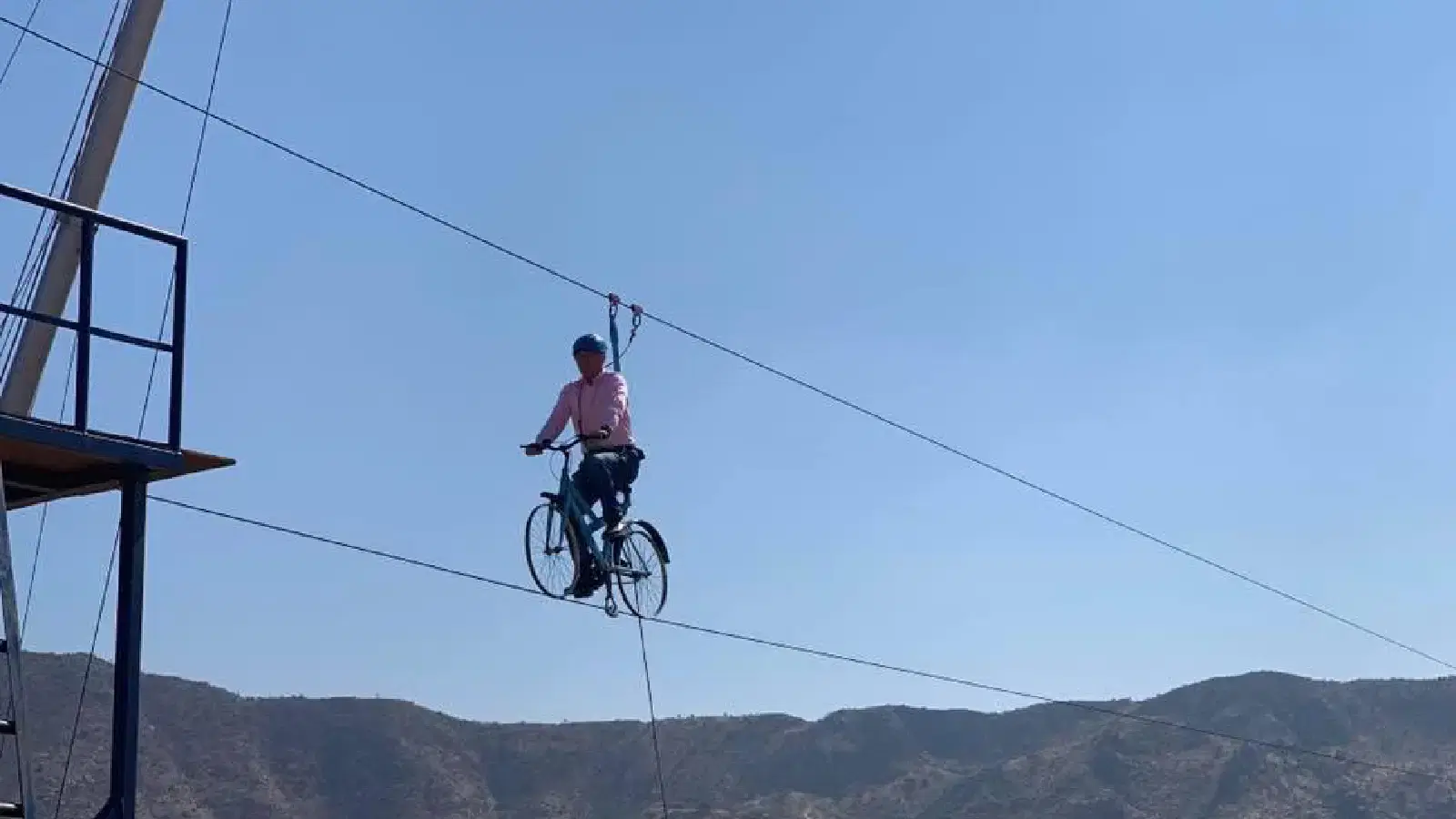
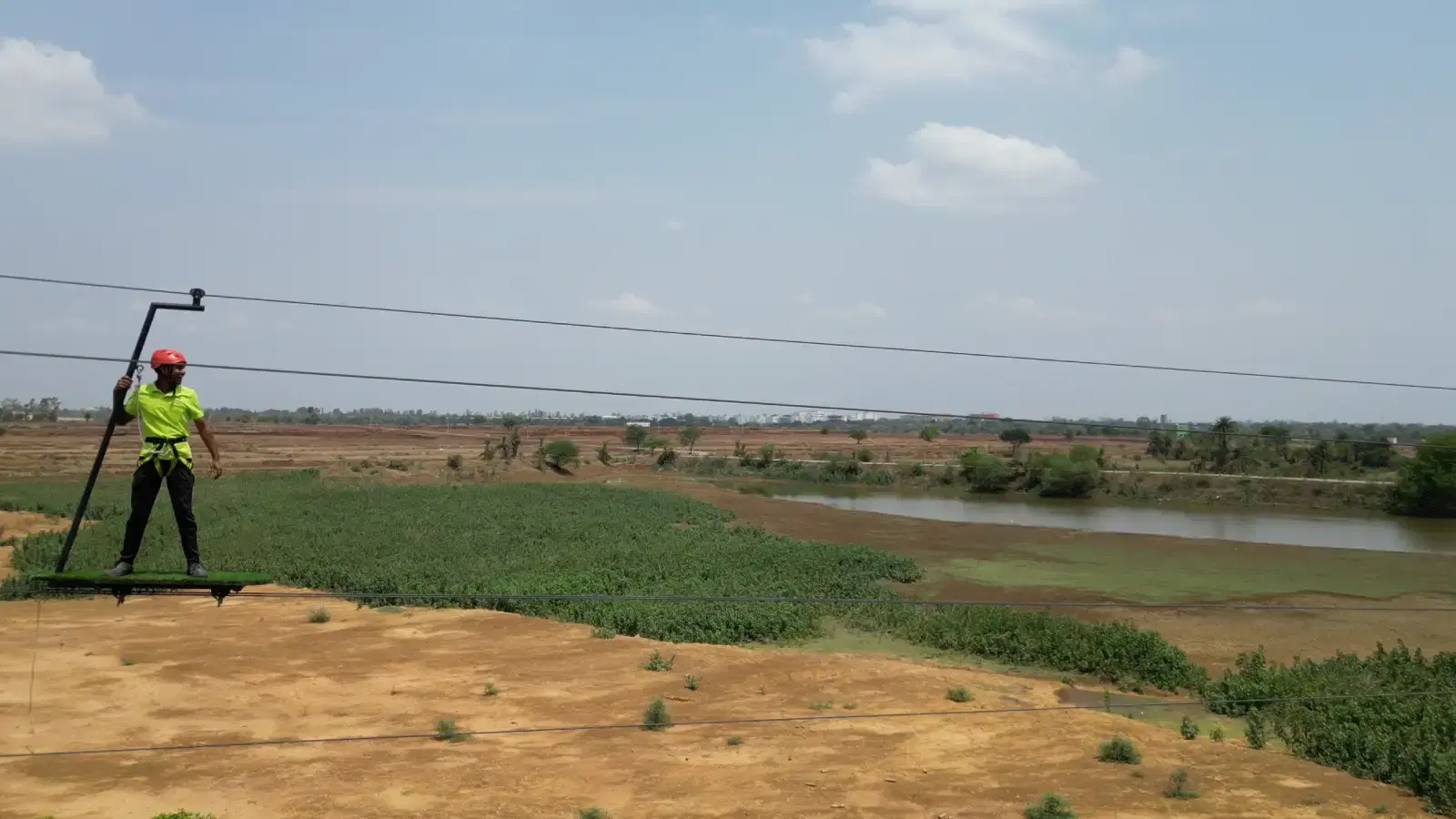
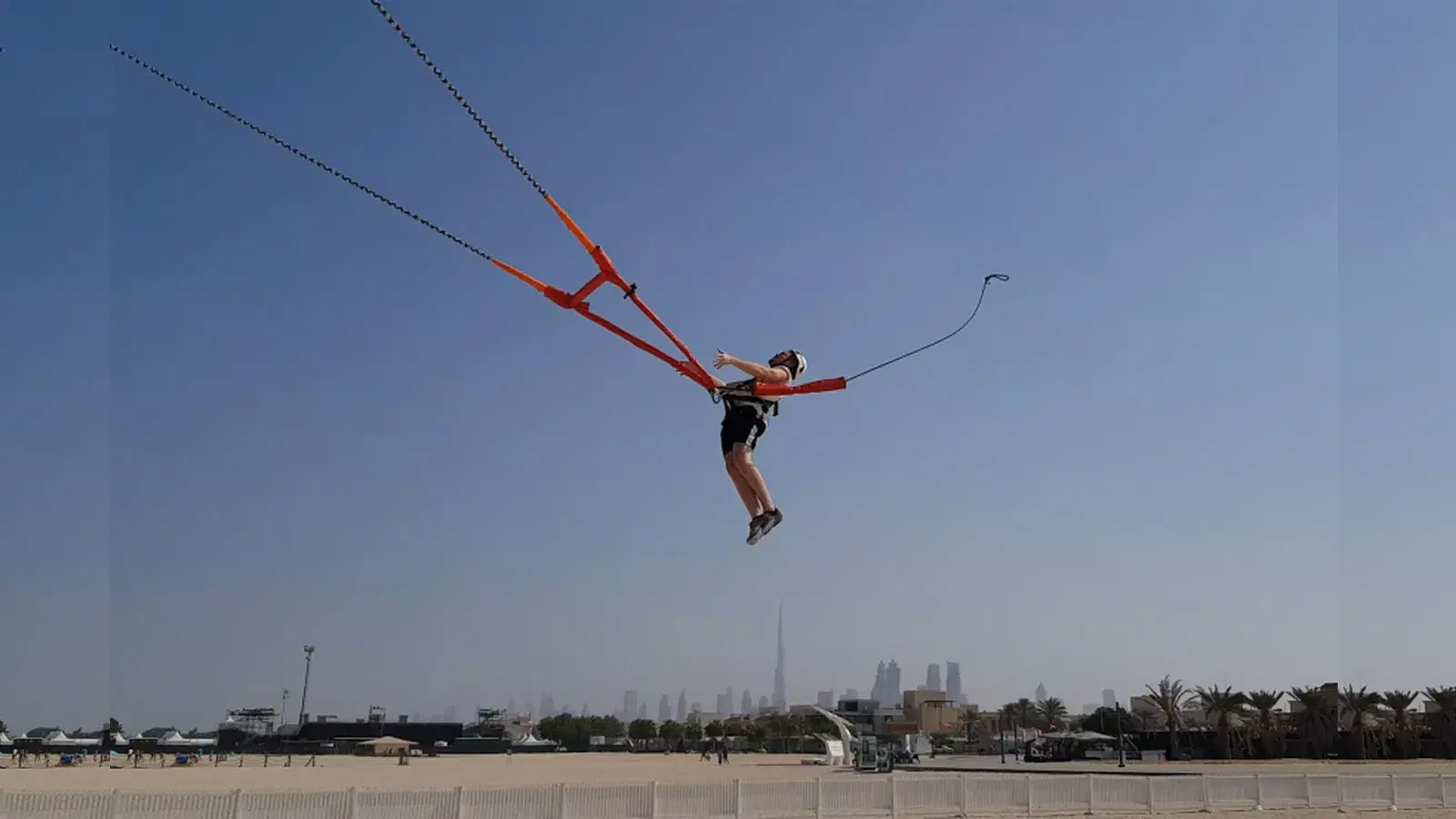
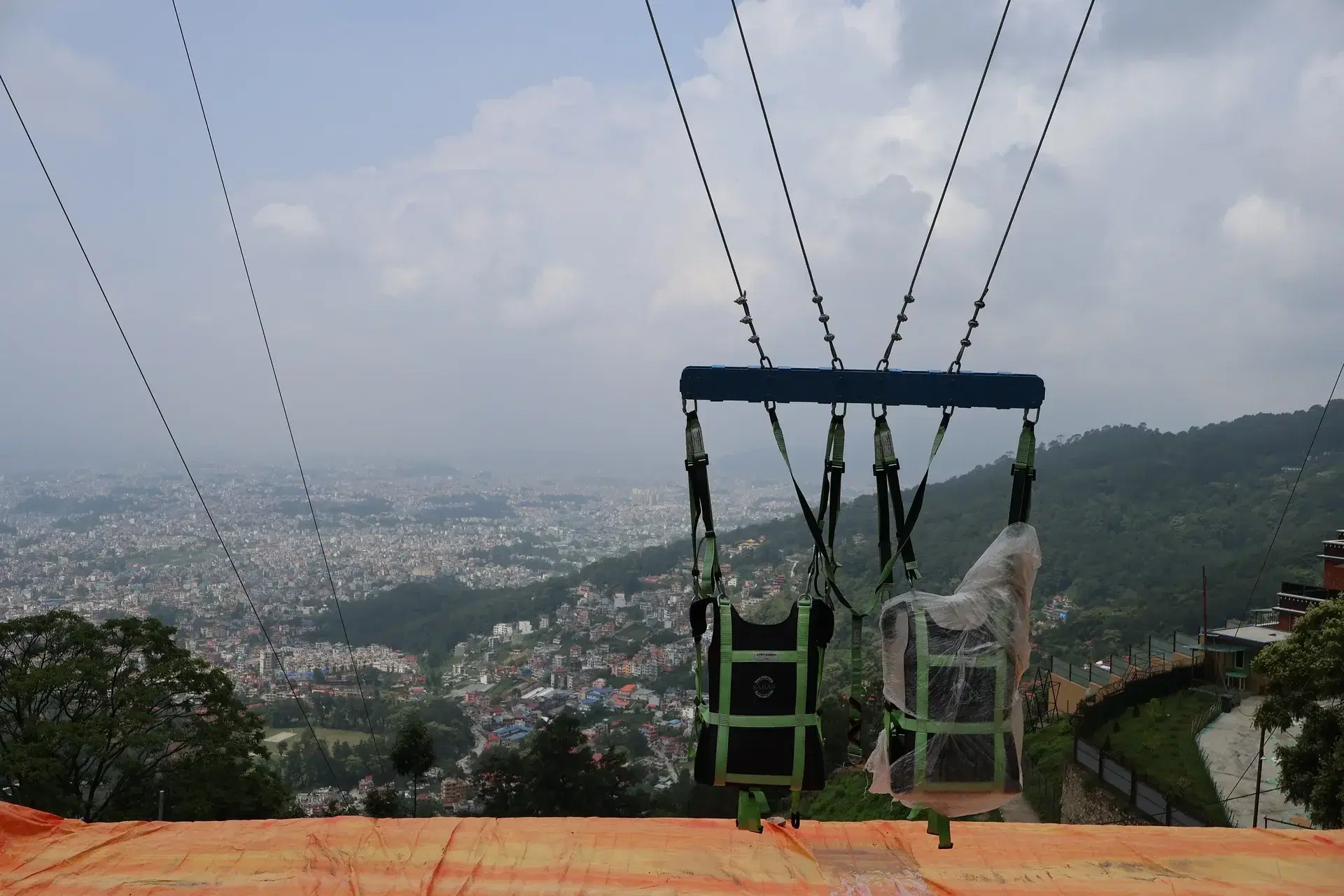
Premium high-impact thrill systems engineered for controlled free-fall experiences. We design and build bungee systems for resorts, tourism landmarks, and adventure parks — engineering proven at D Splash Rishikesh, where we consulted on the bungee setup and built its sky walk, glass bridge and giant swing.

Last updated: July 2026

What It Is & Why It Matters

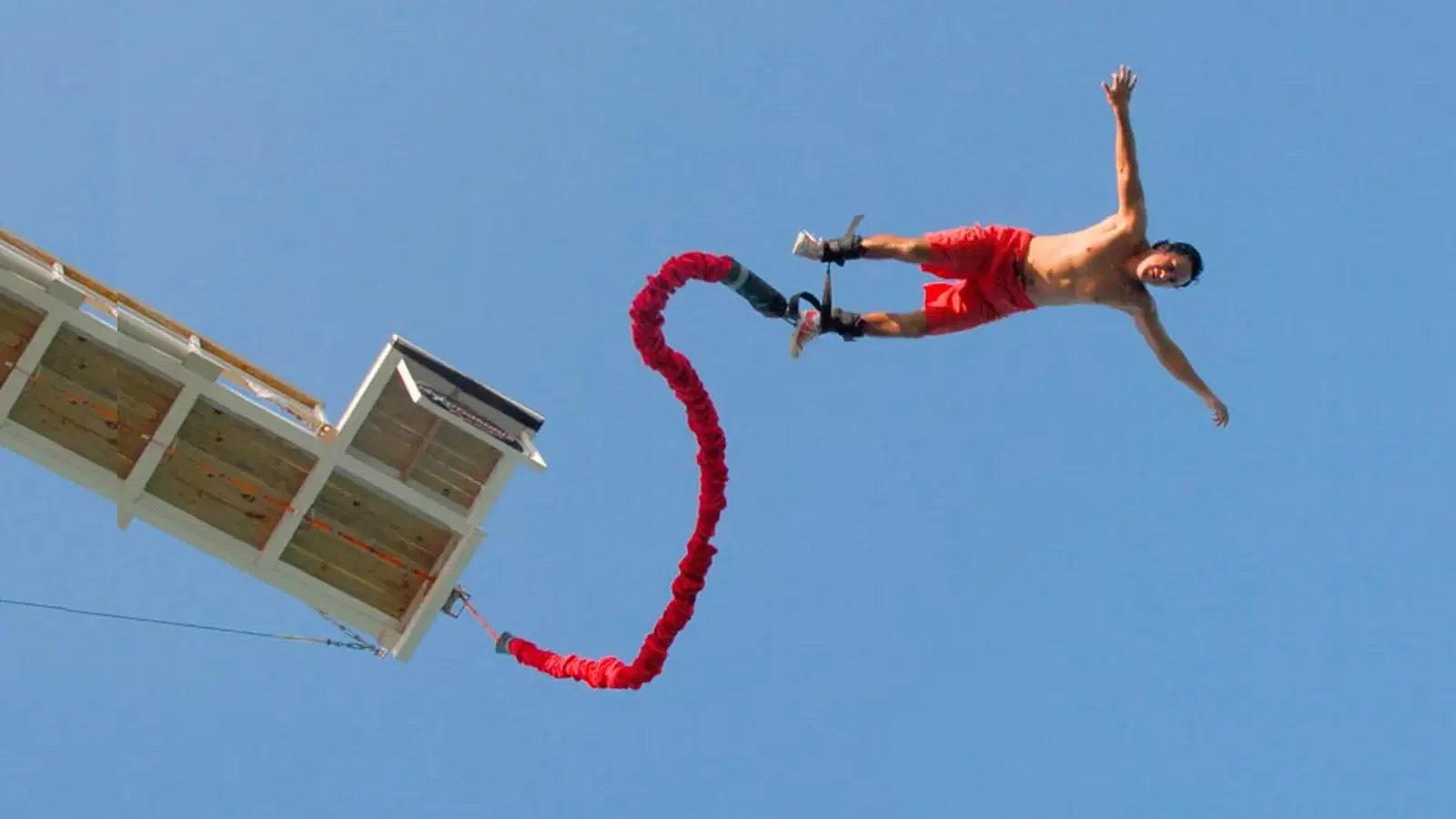
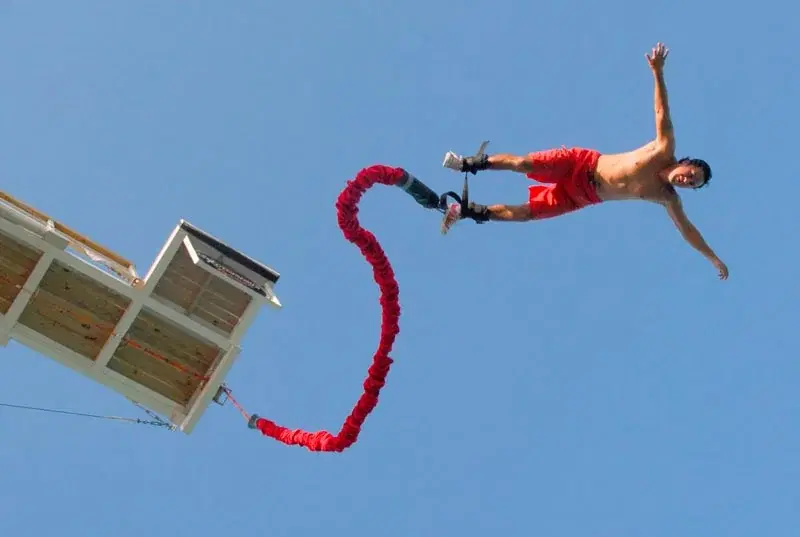
A bungee jump is an engineered free-fall attraction where a jumper leaps from a fixed platform or tower connected to a rated elastic cord that arrests and rebounds the fall. Built to standard, it is a certified height activity with redundant harnesses, load-tested cords and strict operating protocols — engineering and safety are the product.

For operators it is a landmark, high-visibility attraction that anchors a destination, commands premium pricing, draws thrill-seekers, and pairs with other tower and adventure activities.

Key Business Outcomes

  • High ticket value per participant
  • Strong destination branding and media visibility
  • Attraction of thrill-focused and experiential tourists
  • Limited competition increasing exclusivity
  • High marketing and publicity potential
Bungee Jump

Where This Works Best?

Tourism Landmarks
Signature thrill experiences driving destination branding
Adventure Parks
Premium attractions positioned as headline offerings
High-Footfall Urban Locations
Compact high-impact thrill installations
Resorts Targeting Adventure Tourism
Exclusive, once-in-a-lifetime experiences

Types of Bungee Jump Installations

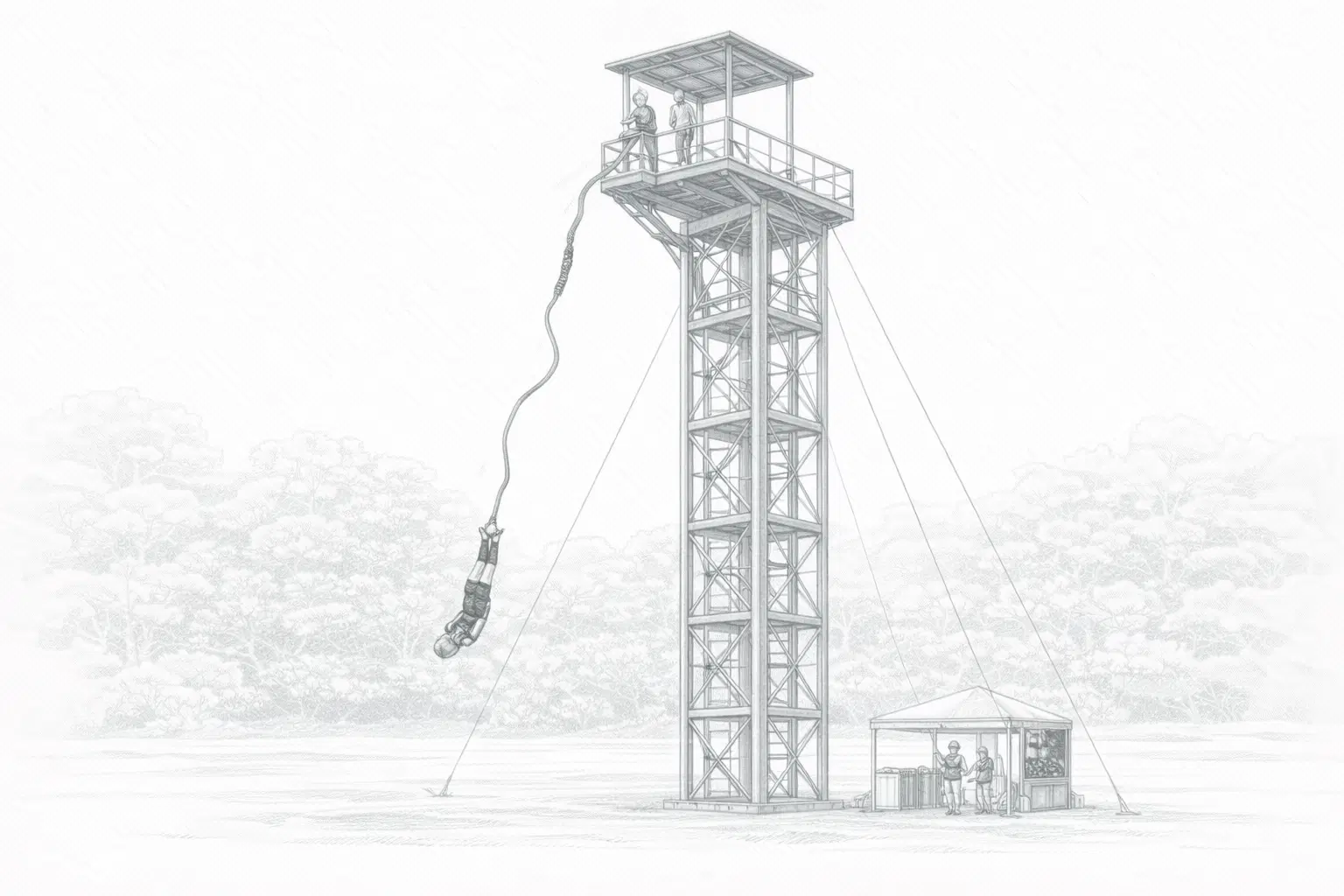
Fixed-Height Tower Jump
Dedicated purpose-built tower with fixed jump height. Most common format for permanent installations.
Bridge or Viaduct Jump

Installed on an existing bridge or elevated structure. Height and clearance defined by the structure.

Crane-Based Mobile Setup

Temporary or semi-permanent crane-mounted system. Useful for events, testing, and seasonal setups.
Custom Terrain Jump
Natural cliff or terrain-elevated platforms with engineered anchor systems. Site-specific design required.

Engineering & Core Components

Bungee Jump
Jump Platform Engineering
Platforms are engineered to support dynamic loading and repeated jump cycles.
Elastic System Selection
Elastic elements are selected and configured based on jump height and rider range.
Anchor & Redundancy Design
Anchor systems are engineered with redundancy to manage peak loads.
Recovery & Retrieval Systems
Systems are designed for controlled jumper recovery and operator efficiency.

Safety as a System

Conservative Jump Calculations
Jump systems are designed with wide safety buffers for rider variation.
Manual System Verification
Elastic elements, anchors, and harness connections are checked before each cycle.
Strict Rider Screening
Weight and participation criteria are enforced through operator checks.
Controlled Recovery Procedures
Jumper recovery follows predefined, rehearsed methods.
Proven at D Splash, Rishikesh
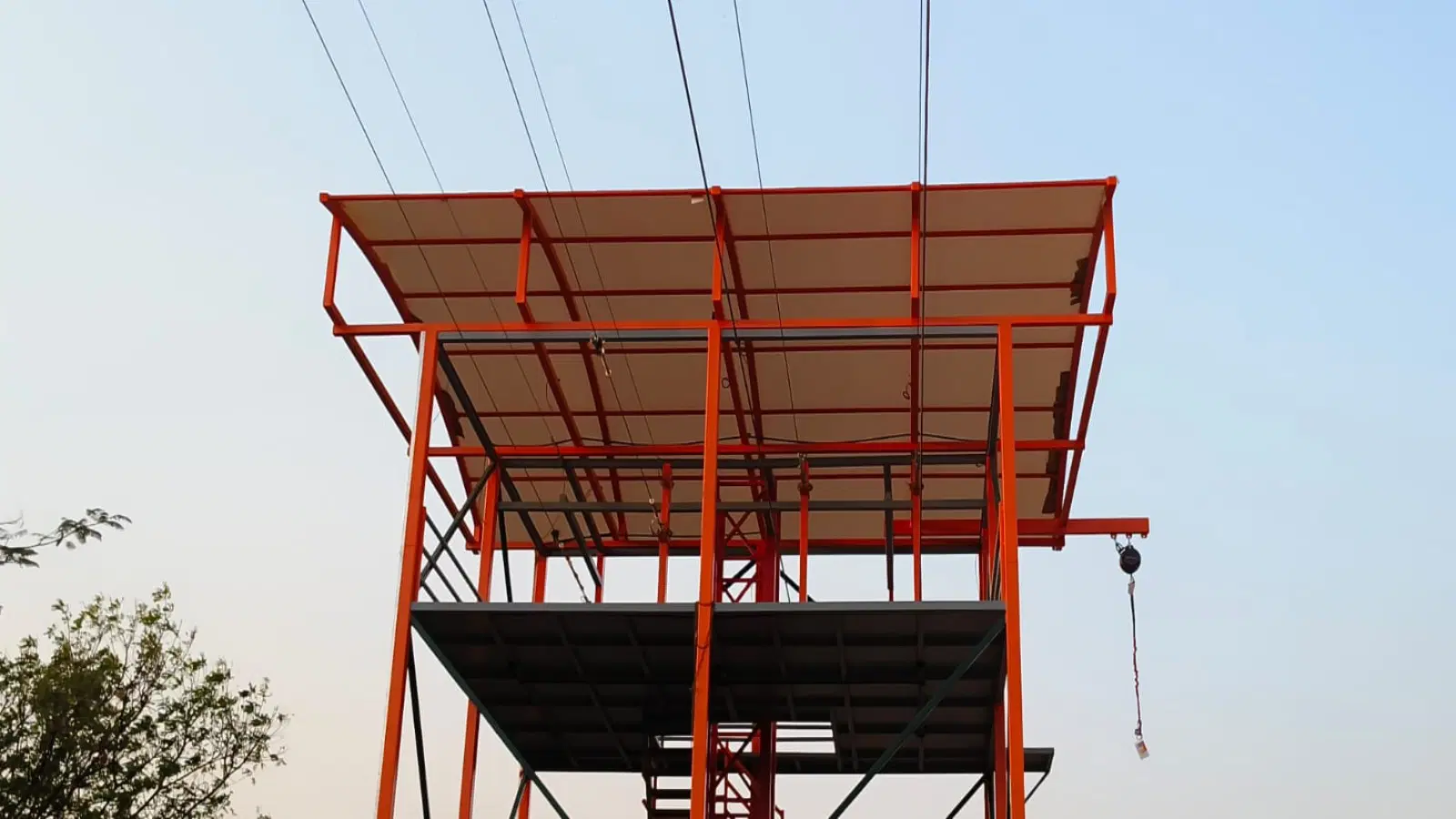
OXO consulted on the bungee setup at D Splash Rishikesh and engineered its supporting attractions — India's first sky walk with belay over a bungee tower, a glass bridge, and the world's first giant swing on a bungee tower.

Indicative Bungee Jump Installation Cost in India (2026)

  • Fixed-height bungee jump₹3–6 crore
  • Custom / tall-structure jump₹5–12 crore+
  • Cost is driven mainly by jump height and structure type — a fixed-height tower, a bridge or viaduct jump, a crane-based setup and a custom-terrain jump each carry very different engineering.
  • OXO delivers bungee jumps both as turnkey tower builds and as an engineering-and-consulting partner on major installations.
  • Price covers structural design, the tower or structure, RCC foundations and installation; certified bungee cords, harnesses and jump equipment are specified to international fall-from-height standards.
  • GST extra; site development and periodic consumable replacement (cords and PPE) are additional and operational.
  • Typical build timeline is 6–12 months from design sign-off to commissioning; the final scope and price follow a site assessment and structural survey.
Planning a Bungee Jump? Let's Talk.
Tell us your site, the jump height you're targeting, and whether you want a fixed tower, a bridge jump or a custom structure — we'll advise on the engineering and share an indicative scope and quote.

Backed by OXO's Adventure Engineering

OXO Planet delivers bungee jumps two ways — as turnkey tower builds and as an engineering-and-consulting partner on major installations — engineered to international fall-from-height standards by the same team behind India's giant swings, multi activity towers, ziplines and climbing walls.

A bungee tower also anchors other high-thrill attractions: at D Splash, Rishikesh, OXO added a sky walk, a glass bridge and the world's first giant swing on a bungee tower. See also our glass bridge & sky walk.

FAQs on Bungee Jump Setup

How much space is required to install a bungee jump in India?

A bungee jump typically requires a minimum height of 50 to 80 metres and a ground clearance zone of at least 3 to 5 metres below the lowest swing point. Horizontal space for recovery, access, and spectator management adds to the total footprint. Final requirements are confirmed after site assessment and structural design.

Can a bungee jump be installed on an existing structure or only as a new build?

Yes, bungee jumps can be installed on existing towers, bridges, or purpose-built structures, subject to detailed structural evaluation. The structure must meet load, anchoring, and safety requirements before integration is confirmed as feasible.

What approvals or permissions are required for a bungee jump in India?

There is no single national licence for bungee jumps in India. Installations typically require local municipal permissions, landowner consent, and internal safety approvals. Additional permissions may apply for public locations, tourist zones, or government-owned land depending on state regulations.

Is bungee jumping safe to operate under Indian conditions?

Yes, bungee jumping is safe to operate in India when designed conservatively and operated with strict procedures. Safety depends on robust structural engineering, conservative jump calculations, routine inspections, trained operators, and defined operating protocols.

Can bungee jumps operate year-round in Indian weather conditions?

Most bungee jumps in India can operate for the majority of the year. Outdoor operations may pause during heavy rain, high winds, or adverse weather. Operating thresholds and weather guidelines are defined during the planning and handover stage.

What kind of maintenance does a bungee jump require?

Bungee jump maintenance involves regular inspection of elastic elements, harnesses, connectors, anchors, and platforms. Consumable components require periodic replacement at defined intervals, while structural elements are inspected on a scheduled basis to ensure continued safety and compliance.

Who can operate and manage a bungee jump on a daily basis?

Bungee jumps are operated by trained on-site staff without requiring a specialised engineering background. Operators are trained in participant briefing, weight checks, loading procedures, jump release control, and emergency response — all following strict procedural discipline.

What capacity can a bungee jump handle per hour?
Bungee jumping has a deliberate cycle — harnessing, checks, jump and recovery — so a tower typically handles about 8–15 jumps per hour under strict safety protocols. Throughput depends on platform height, staffing and the recovery method.
How much revenue can a bungee jump generate?
A bungee jump is a landmark, premium-priced attraction with strong repeat and bucket-list appeal; it anchors a destination while add-ons like photos and video lift per-jump spend. Actual returns depend on location, footfall and pricing — we can share indicative models during planning.
How long does it take to install a bungee jump?
A bungee jump usually takes about 12–20 weeks to install, given the tower fabrication, foundations, platform and safety systems. The final schedule follows a site assessment.
What factors should be considered while planning a bungee jump project in India?

Key planning factors include available height, structural feasibility, rider throughput targets, staffing capability, emergency access, and long-term maintenance planning. Early alignment on these factors is critical for safe operation and smooth regulatory acceptance.

Related Aerial Attractions

More activities in Aerial Attractions — engineered for safety, throughput, and long-term operations. Explore other systems in this category built by OXO Planet.
Contact Us

Let’s start the adventure

For project-level discussions, a brief call or WhatsApp conversation helps us understand your requirements faster and respond more accurately.

Say hello

Location

1st floor, C, 2/10, Block B, Mayapuri Industrial Area Phase II, Mayapuri, New Delhi, Delhi, 110064
We operate with a focused project team. For urgent queries, calling us ensures quicker response.