Fun Wall Design & Installation for Kids

Fun Wall Design & Installation for Kids

Themed, play-oriented vertical climbing systems designed for children aged 3–14. Built to EN 1176 playground safety standards with age-appropriate heights, impact-absorbing flooring, and rounded-edge construction. Designed for schools, malls, family entertainment centres, and resorts. Installed across India since 2019.

What It Is & Why It Matters

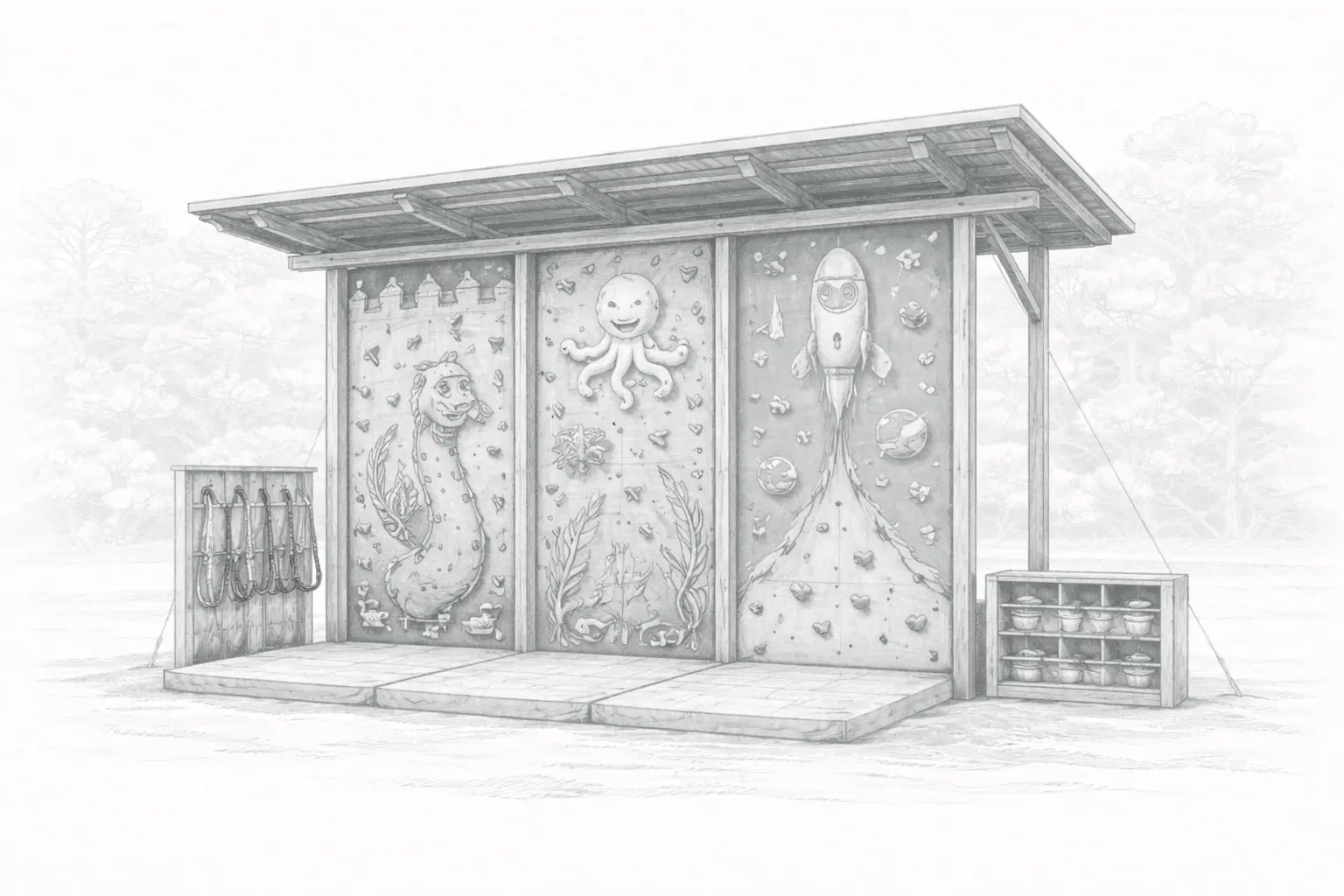
A fun wall for kids is a themed, low-height climbing and interactive play structure designed specifically for children aged 2 to 14. Unlike adult climbing walls, fun walls combine vertical climbing elements with interactive games — rings, spinners, panels, peg boards, sliding poles — set within colourful, character-themed enclosures. Wall heights are age-banded: 1.2–2m for children aged 2–5, and up to 3.5m for children aged 5–14, in line with EN 1176 Part 1 (playground equipment) and EN 12572 (artificial climbing structures) maximum free-height-of-fall guidelines.

Also referred to as kids' climbing walls, children's adventure walls, or junior fun walls, these structures are built using rounded-edge HDPE panels, non-toxic powder-coated steel frames, and T-nut hold systems with child-scaled grip sizing. Impact-absorbing flooring beneath and around the structure must meet EN 1177 (impact attenuation of playground surfacing) with a minimum HIC (Head Injury Criterion) value rated to the wall's maximum fall height. In India, equivalent standards under IS 9873 (BIS playground equipment) apply for institutional and school procurement.

Commercially, fun walls outperform most indoor play assets on a revenue-per-square-metre basis. High visual appeal drives footfall, short session times (8–15 minutes) allow fast participant turnover, and themed designs create strong social media sharing from parents — generating organic reach at zero cost. For schools, the developmental case is equally strong: climbing-based play builds proprioceptive development, bilateral coordination, grip strength, and problem-solving in children, all documented under physical literacy frameworks used by school PE curricula in India and globally.

Key Business Outcomes

  • High engagement among younger age groups
  • Strong visual attraction within indoor play zones
  • Low fear factor encouraging participation
  • Suitable for birthday parties and group activities
  • Quick turnover with simple supervision
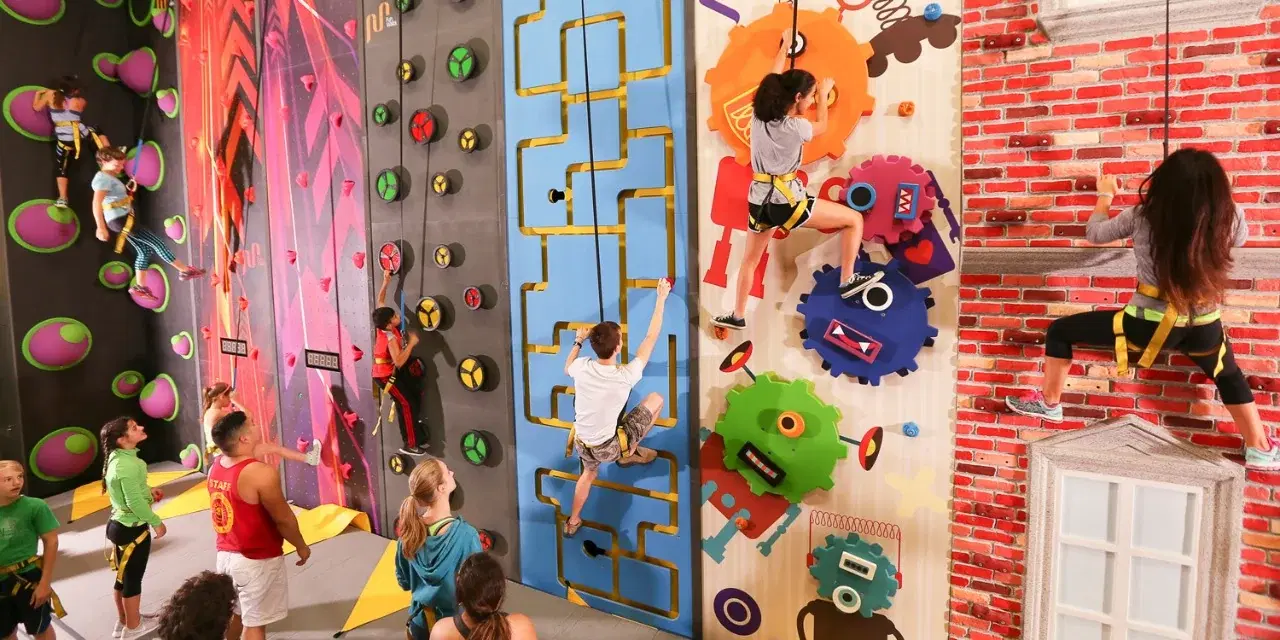
Fun Wall for Kids

Where This Works Best?

Indoor Play Zones
Colourful, interactive climbing experiences
Family Entertainment Centres
Child-friendly vertical play
Malls & Commercial Spaces
Compact visual attractions
Educational Play Areas
Movement-based engagement for children

Types & Configurations

Standard Fun Wall (Wall-Mounted)
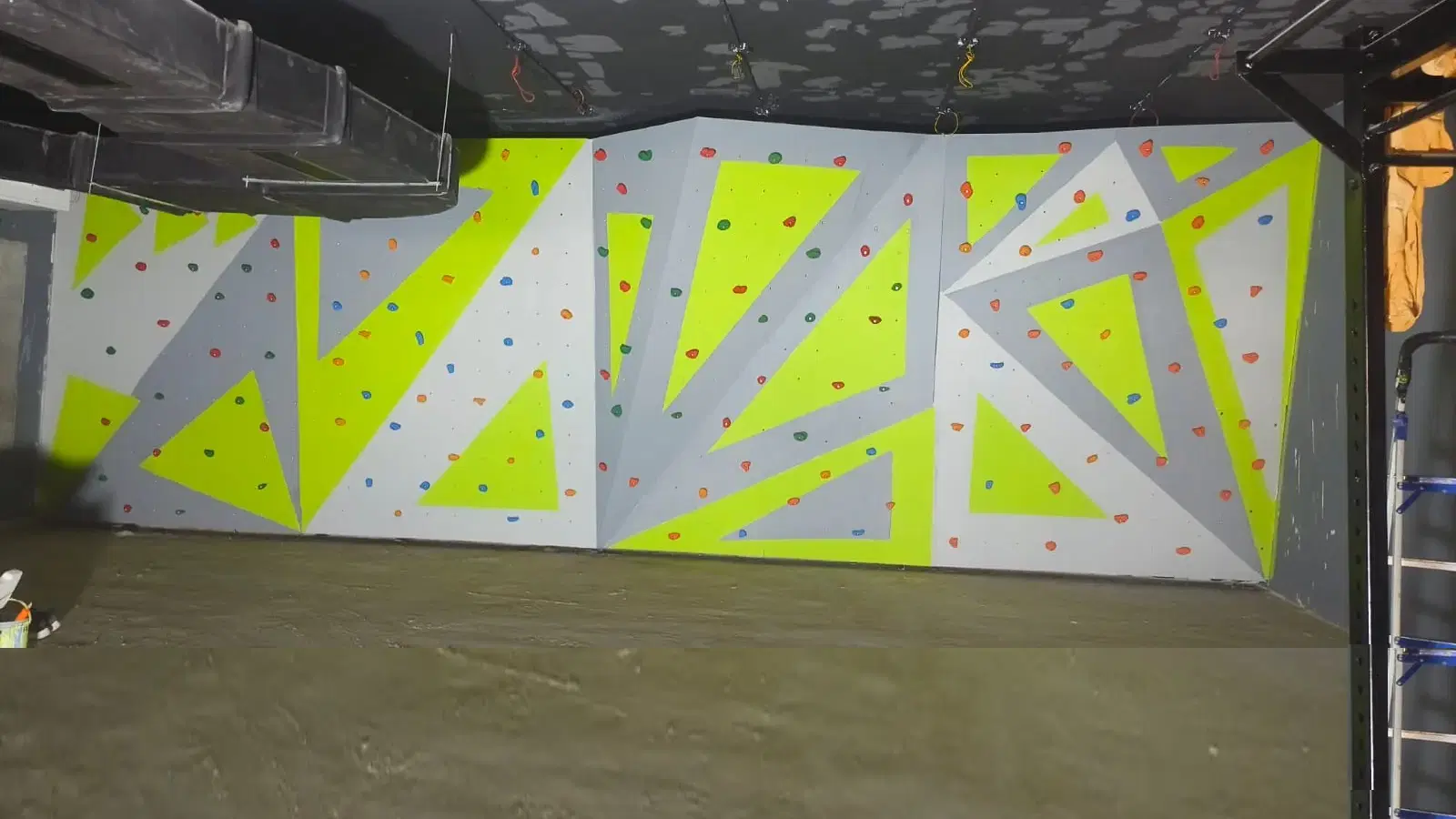
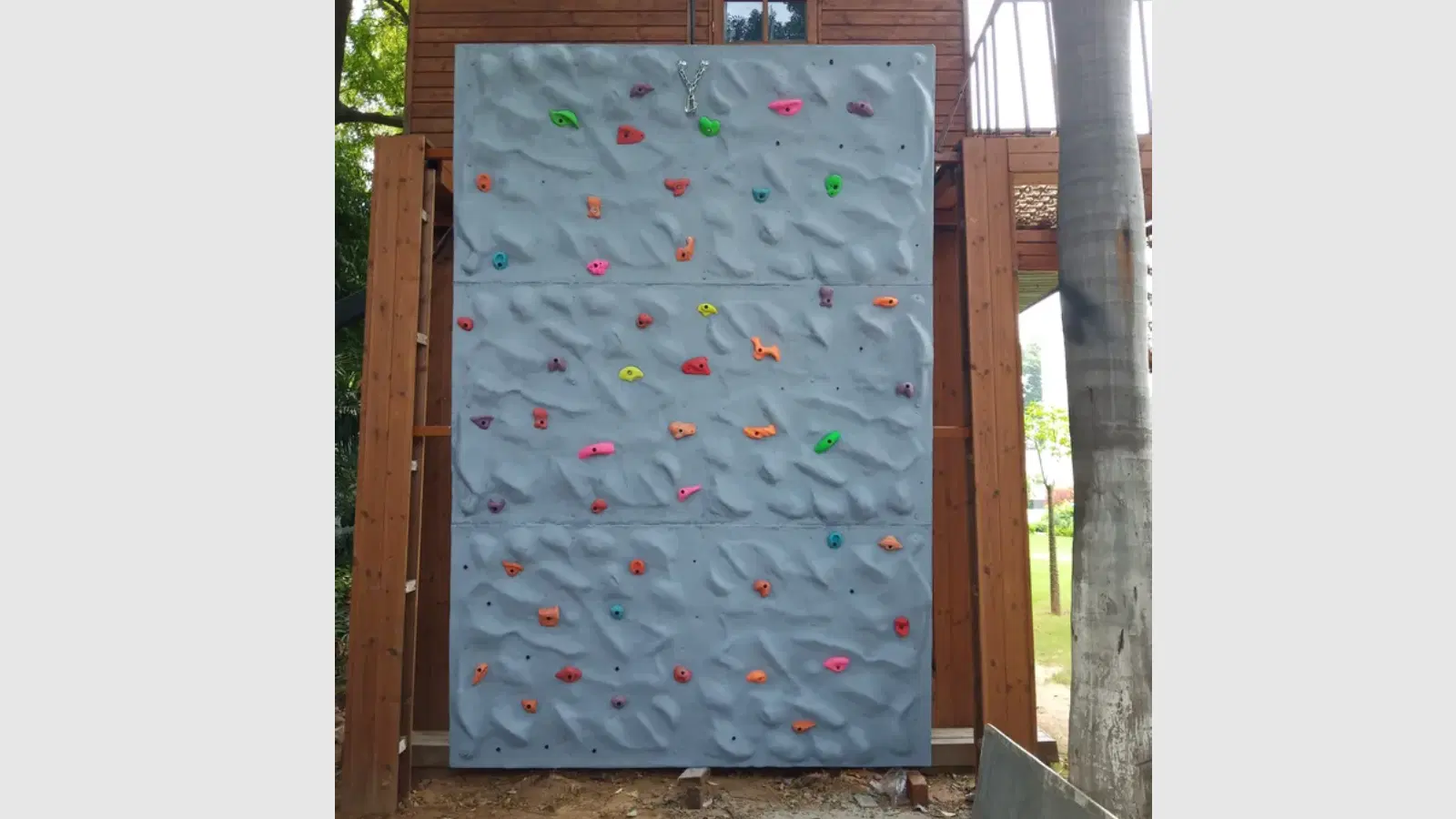
A flat or gently angled climbing wall panel system mounted to an existing wall or freestanding frame, fitted with child-scaled holds, rung ladders, and interactive panels. The most cost-effective format for schools and gyms with existing wall space. Heights typically range from 2m to 3.5m depending on age group.
Freestanding Themed Tower
Standalone multi-face structure with climbing panels on 2–4 sides, integrated slides, fireman poles, and themed graphics. Common in malls, FECs, and resort play zones where wall attachment is not possible. Footprint ranges from 4m × 4m to 8m × 8m. These structures typically combine EN 1176 playground equipment and EN 12572 climbing structure elements in one build.
Multi-Game Interactive Wall
Flat panel system incorporating climbing holds alongside interactive elements — spinning discs, colour-matching panels, sensory boards, tic-tac-toe grids, and abacus tracks. Designed for preschool and early primary age groups (2–7 years). Maximises engagement time per child without requiring height or upper-body strength, making it suitable for children who may be hesitant about vertical climbing.
Portable / Event Fun Wall
Lightweight modular panel system on a bolt-together frame designed for temporary installations, brand activations, school fairs, and event use. Can be assembled and dismantled in 2–4 hours. Typically 2m high × 3–5m wide. Used for Mountain Dew-style campus activations and retail events where permanent installation is not possible.

Engineering & Core Components

Fun Wall for Kids
Child-Focused Structural Design
Fun wall frames are fabricated in hot-dip galvanised or powder-coated structural steel with no exposed sharp edges or pinch points — compliant with EN 1176-1 general requirements for playground equipment. Frame joints use tamper-resistant fixings (Torx or square-drive bolts) inaccessible to children. Freestanding structures are base-plated and anchored; wall-mounted systems use resin-anchored M12 or M16 bolts rated to dynamic climbing loads.
Interactive Element Integration
Interactive components — spinners, peg boards, ring panels, bead mazes — are rated for minimum 50kg point load per EN 1176-1, with rotation mechanisms tested to 10,000 operating cycles before deployment. Hold sizes are child-scaled (30–60mm grip width vs. adult 40–80mm), and all surface textures are designed for dry and sweaty-palm grip without abrasion risk.
Surface Safety & Impact Flooring
All panels use non-toxic, UV-stable HDPE or GRP material with rounded or radiused edges (minimum 3mm radius on all exposed edges per EN 1176). Impact-absorbing flooring beneath the structure — rubber tiles, EPE foam, or engineered wood chip — is specified to EN 1177 HIC compliance for the wall's maximum fall height. For a 2m wall, minimum 40mm rubber tile (HIC-rated) is standard; for a 3.5m wall, 65mm rubber tile or 300mm engineered bark is required.
Supervision Visibility Design
Wall geometry and structural layout are designed to minimise visual blind spots for supervising adults. Freestanding towers use open-frame construction rather than solid-panel enclosures, ensuring 270°+ sight lines from a single supervision point. For enclosed multi-face towers, integrated viewing platforms at adult eye level (1.6m) are built into the design to maintain unobstructed supervision across all climbing surfaces.

Safety as a System

Child-Scaled Structural Design
Wall heights are age-banded per EN 1176 maximum free-height-of-fall guidelines: up to 1m for ages 2–3, up to 2m for ages 3–7, and up to 3m for ages 7–14. All exposed fixings are tamper-resistant. Frame clearances eliminate entrapment zones (no openings between 89mm and 230mm that could trap a child's head — EN 1176-1 requirement).
Soft Contact & Impact Surfaces
All contact surfaces use smooth, non-abrasive HDPE or GRP with minimum 3mm edge radii. Impact flooring is EN 1177 HIC-rated to match the wall's maximum fall height. Rubber tile, foam, or engineered bark installations are checked monthly for compression, damage, and displacement — replacement is scheduled proactively before HIC compliance falls below threshold.
Clear Supervisor Sightlines
Structures are designed to maintain 270°+ sightlines from a single adult supervision position. Open-frame construction, transparent panels, and defined single-entry points ensure supervisors can monitor all active climbers without moving position. For multi-face towers, supervision platform integration is standard in designs exceeding 4m × 4m footprint.
Usage Control & Capacity Management
Maximum simultaneous user counts are defined per installation (minimum 4 sq.m per active child on climbing structures). Supervision protocols enforce single-file queuing, weight-appropriate zone assignments (toddler vs. junior sections), and no-adult-climbing rules on child-rated structures. Daily pre-opening safety checks cover hold tightness, mat position, and interactive element function.
Projects We've Delivered
Implemented across adventure parks, resorts, and institutional recreation projects in India.

Indicative Fun Wall for Kids Installation Cost in India

  • Standard Fun Wall₹8–18 lakh
  • Multi-Game / Themed Wall₹12–70 lakh
  • Low-height Fun Wall₹5–12 lakh
  • Game count increases cost
  • Indoor structure may be additional
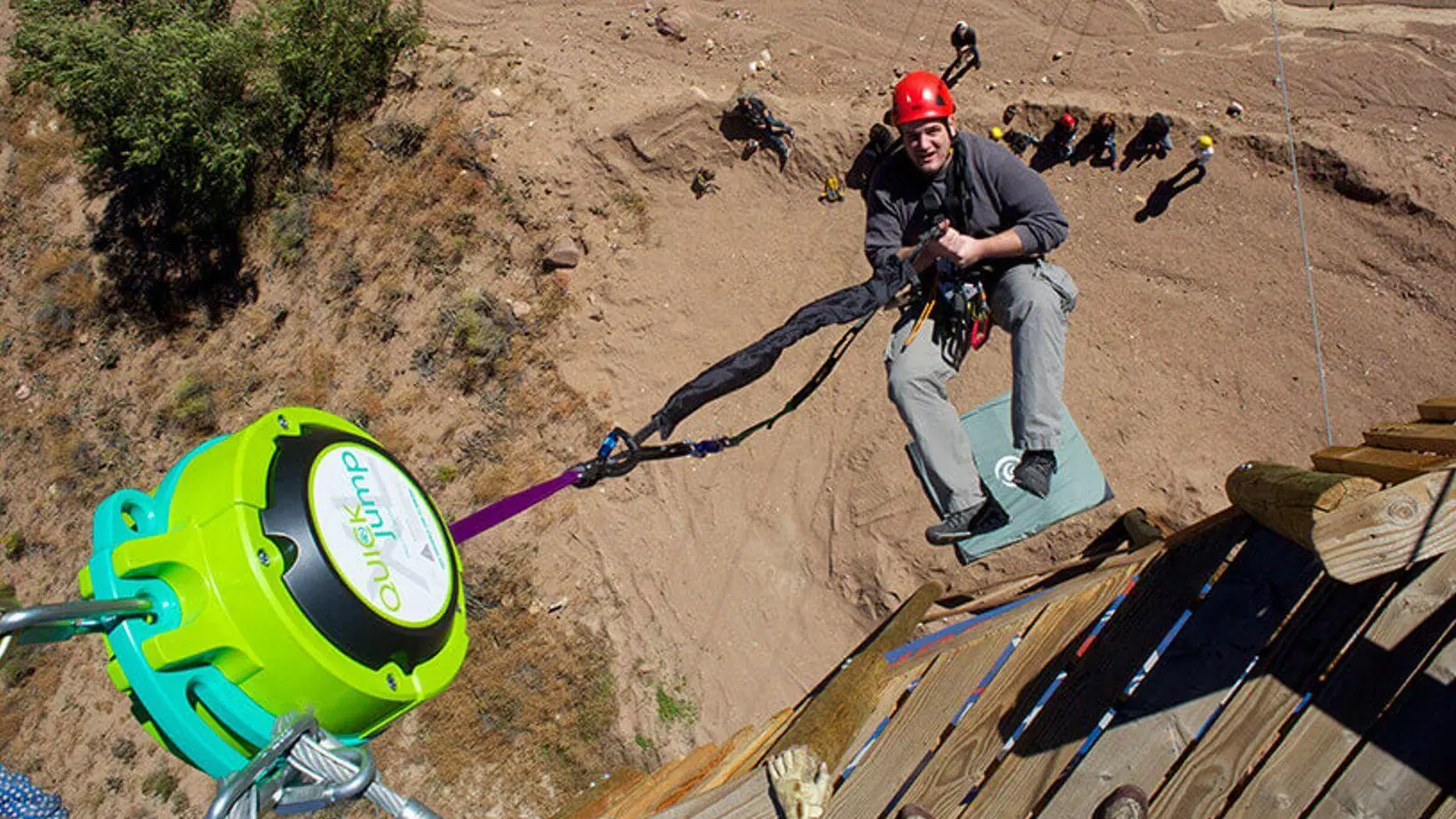
  • Automatic belay system increases cost

FAQs on Fun Wall for Kids Setup

How much space is required to install a fun wall for kids in India?

Space requirements depend on wall type, height, and the number of interactive games included. A wall-mounted fun wall (3.5m high × 4m wide) requires a minimum floor area of 4m deep × 4m wide including the impact zone in front. A freestanding themed tower (4m × 4m base) requires the tower footprint plus a minimum 2m clear safety perimeter on all active sides, giving a total floor area of roughly 64 sq.m. Ceiling clearance must exceed wall height by at least 0.5m. Final space planning is confirmed after site assessment and layout design.

Can fun walls be installed indoors, outdoors, or both?

Fun walls for kids can be installed both indoors and outdoors. Indoor installations are the most common format in India — malls, schools, and FECs benefit from year-round, weather-independent operation. Outdoor installations require UV-stable panel materials, weather-resistant powder-coated steel, and non-slip surface textures for wet conditions. In India's monsoon climate, covered outdoor structures are preferred. Exposed outdoor fun walls should use GRP panels with UV inhibitors rather than standard HDPE to prevent colour fading and surface degradation within the first 3–5 years.

What approvals or permissions are required for a fun wall for kids in India?

There is no specific national licence for fun walls in India. For school installations, internal safety committee approval and alignment with IS 9873 (BIS playground equipment standards) are increasingly expected during procurement. For malls and commercial properties, NOC from the mall management and fire safety clearance for the play zone are standard requirements. Insurance for the play zone should cover public liability for children's activity equipment — most underwriters require the equipment supplier to confirm EN 1176 or equivalent compliance. Defence and government installations follow internal infrastructure approval protocols.

Are fun walls safe for young children and first-time users?

Fun walls are safe for young children when designed to EN 1176 age-banding guidelines, fitted with EN 1177-compliant impact flooring, and actively supervised. For children under 5, height limits of 1–2m and smooth, non-projecting surfaces are required. For mixed-age installations, toddler zones (ages 2–5) should be physically separated from junior zones (ages 5–14) to prevent size-mismatch collisions. Route difficulty, grip sizes, and rung spacing are all scaled to target age groups as part of the design brief.

Can fun walls operate year-round in Indian conditions?

Indoor fun walls operate year-round without weather interruption. Outdoor installations may require temporary closure during heavy monsoon rain or when temperatures exceed 42°C, as hot panel surfaces create burn risk for bare-skinned contact. Rubber impact flooring requires seasonal inspection in outdoor settings as UV exposure and thermal cycling accelerate compression loss over 3–5 years. Indoor installations under controlled temperature have significantly longer mat life — typically 8–10 years before replacement.

What kind of maintenance does a fun wall require?

Fun wall maintenance includes daily pre-opening inspection of all holds, interactive elements, and impact flooring; weekly tightening of all visible fixings; monthly deep cleaning of panels and holds with non-toxic, child-safe cleaning agents; and quarterly structural inspection of frame connections and base anchors. Interactive mechanical elements (spinners, rotating panels) are lubricated and load-tested every 3 months. Annual formal inspection against EN 1176 or IS 9873 by a qualified person is recommended — and is increasingly required by institutional buyers and insurers.

Who can operate and supervise a fun wall on a daily basis?

Fun walls are supervised by trained on-site staff who manage participant flow, enforce age-zone rules, monitor impact flooring condition, and provide basic first aid response. No climbing certification is required. For school settings, existing PE staff can be trained in supervision protocols within a half-day induction. For high-footfall commercial venues (malls, FECs), a dedicated supervisor per 20–30 active children is recommended. Staff must conduct a formal pre-opening safety check daily and log it — this documentation is required by most public liability insurers.

What factors should be considered while planning a fun wall for kids project in India?

Key planning factors include target age group and height banding (toddler vs. junior zones), indoor versus outdoor location, available floor area and ceiling height, theming brief and brand alignment, interactive game mix, EN 1176 and IS 9873 compliance requirements, impact flooring specification, supervision staffing model, and cleaning and maintenance plan. Early decisions about whether to build a wall-mounted system, freestanding tower, or multi-game interactive wall determine structural and spatial requirements and should be confirmed before site planning begins.

A smarter way to build adventure experiences — engineered for safety, throughput, and long-term operations. Since 2019, OXO Planet has delivered turnkey adventure infrastructure across resorts, schools, defence, tourism destinations, and entertainment venues — from design + fabrication to installation, training, and audits.

Activities We Make

Contact Us

Let’s start the adventure!

For project-level discussions, a brief call or WhatsApp conversation helps us understand your requirements faster and respond more accurately.

Say hello

Location

1st floor, C, 2/10, Block B, Mayapuri Industrial Area Phase II, Mayapuri, New Delhi, Delhi, 110064
We operate with a focused project team. For urgent queries, calling us ensures quicker response.