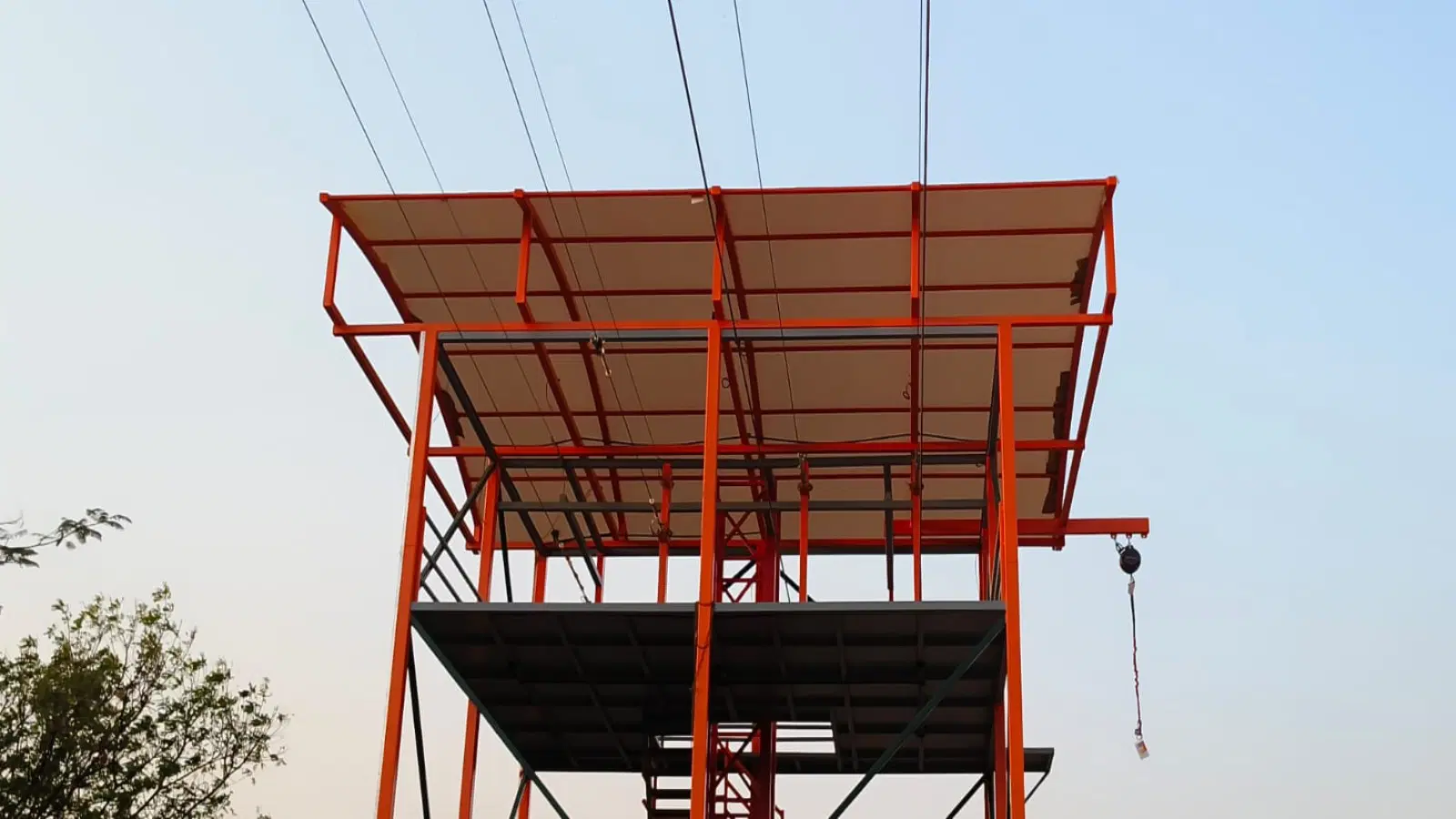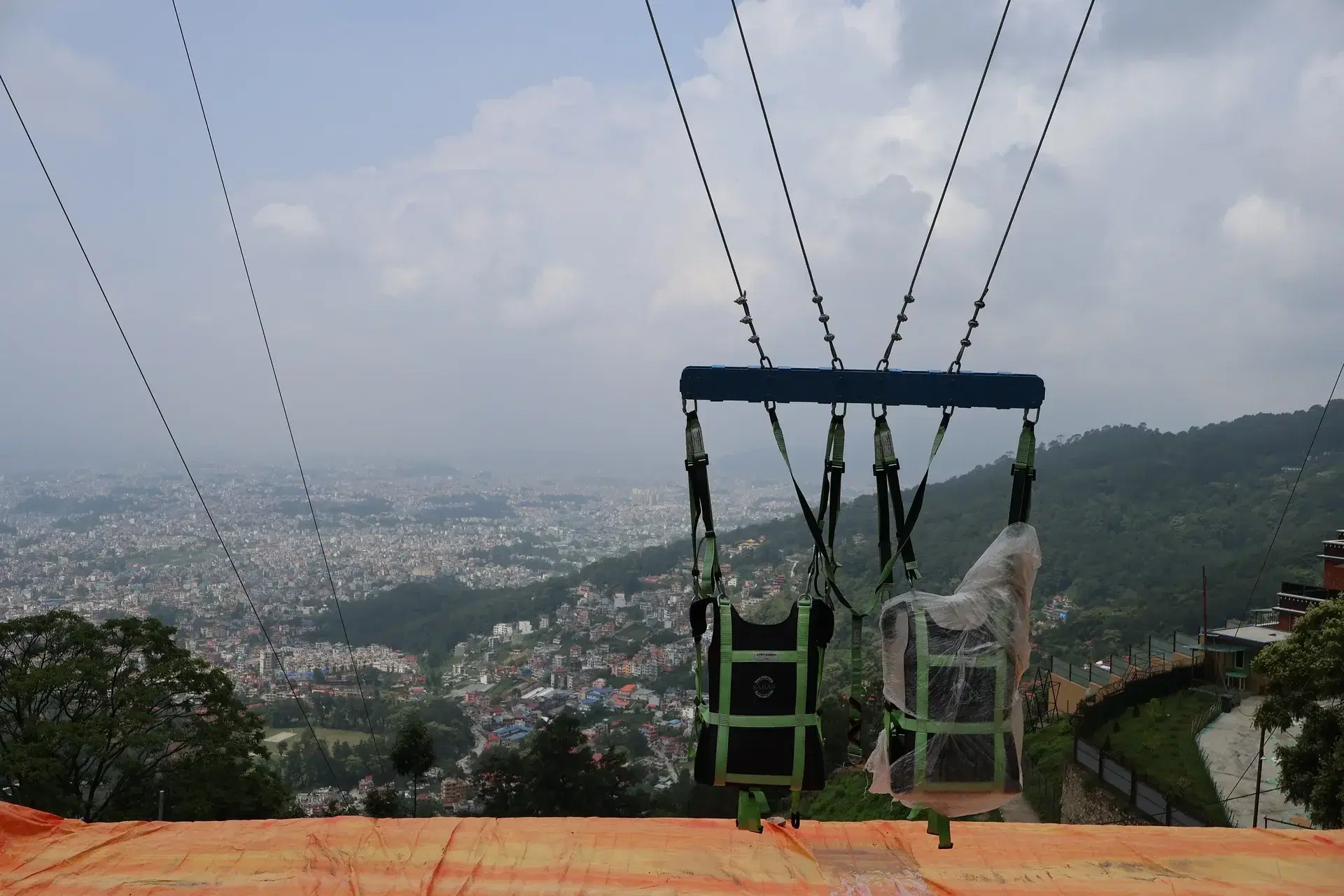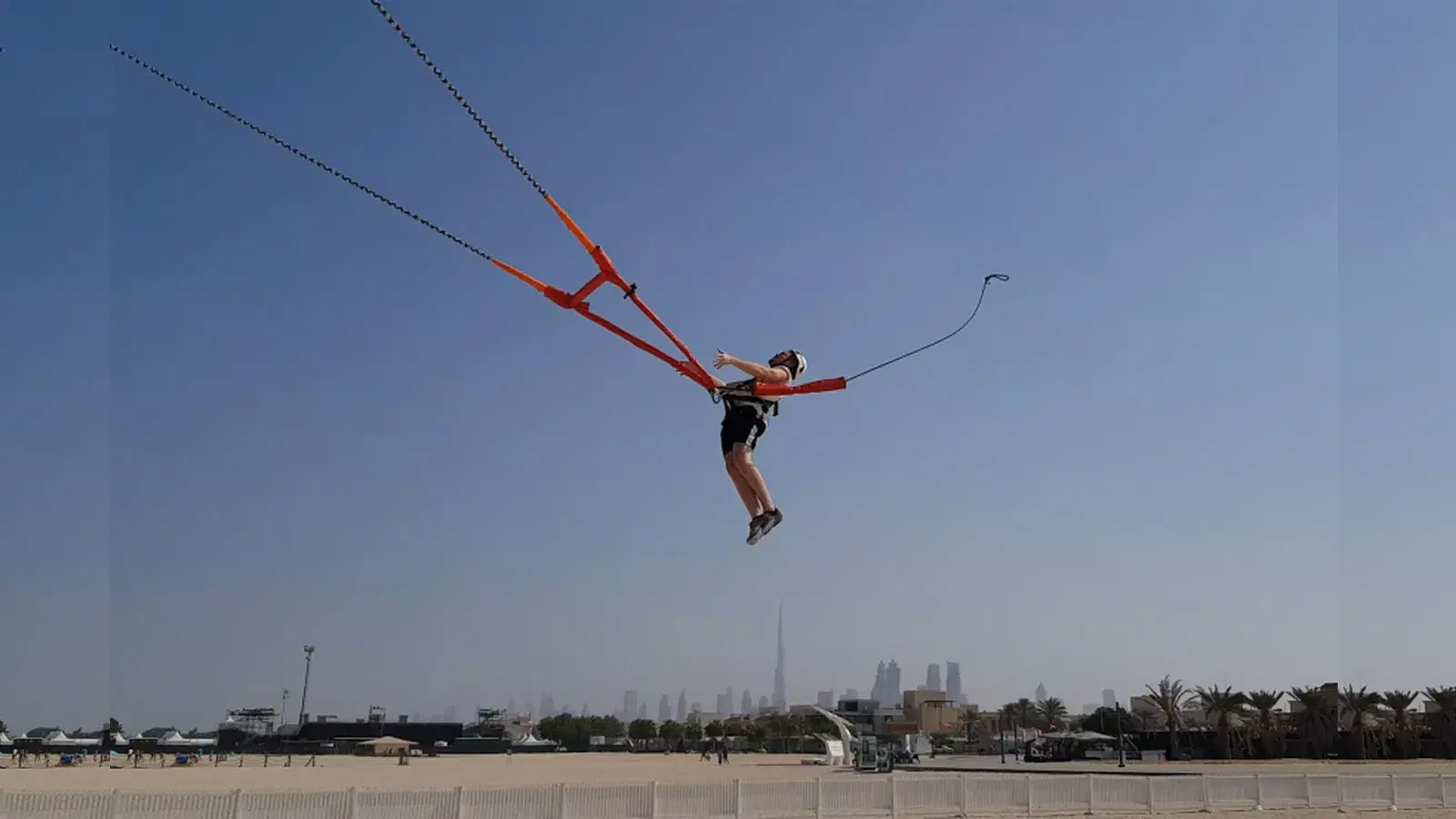
Human Slingshot & Ejector Ride Installation

Human Slingshot & Ejector Ride Installation

Compact high-intensity launch systems with fast ride cycles. We design and build slingshot systems for urban adventure parks, multi-activity towers, and high-energy destinations — engineered to the same IS 456 / IS 800 standards as our delivered aerial attractions.

Last updated: July 2026

What It Is & Why It Matters

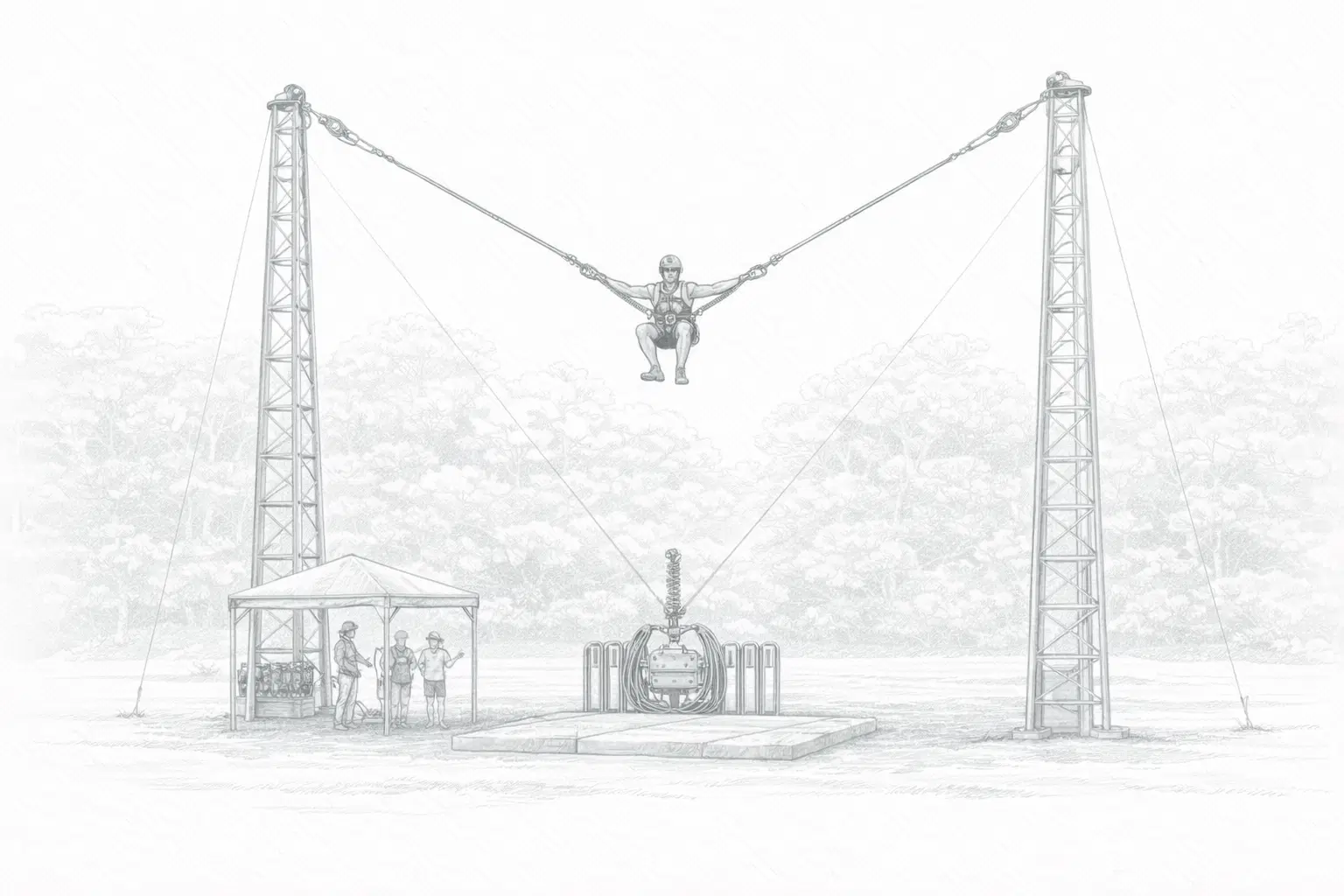
A human bungee slingshot — often called a reverse bungee or catapult — is an engineered launch ride that fires a two-seat capsule skyward using tensioned elastic cords stretched between a pair of steel towers. Built to standard, it is a certified thrill ride with redundant restraints, load-rated cords and a controlled release system, not an improvised setup.

For operators it is a compact, high-visibility attraction that delivers an intense few seconds of airtime, draws crowds and repeat riders, and works as an anchor activity at adventure parks, fairs and tourism destinations.

Key Business Outcomes

  • Fast ride cycles enabling high daily throughput
  • Strong impulse participation driven by visual impact
  • Compact footprint suitable for urban or limited spaces
  • High excitement-to-space ratio
  • Effective add-on attraction within larger adventure parks
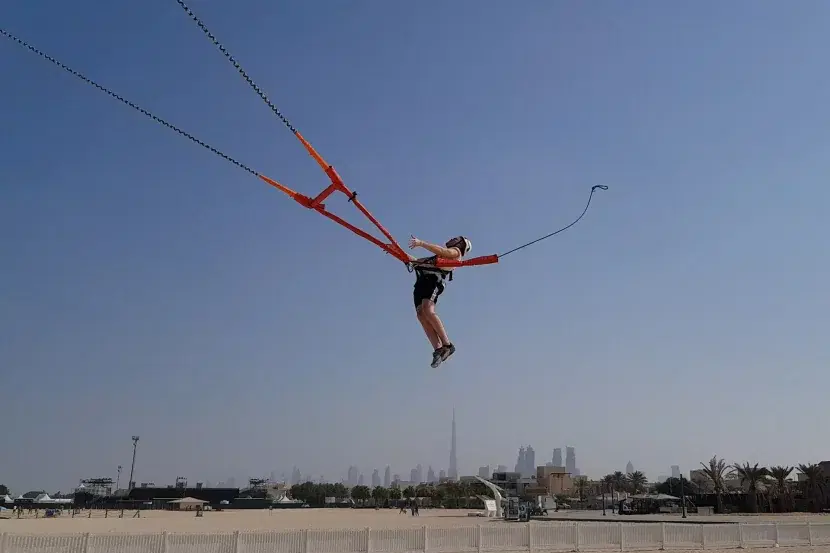
Human Bungee Slingshot

Where This Works Best?

Urban Adventure Parks
Compact thrill attractions with fast ride cycles
Multi-Activity Towers
Integrated high-impact elements within vertical structures
Youth-Focused Zones
High-energy environments demanding instant engagement
Limited-Space Locations
Strong thrill delivery with minimal footprint

Types & Configurations

Single-seat ejector
One rider is harnessed into the seat at ground level, held down, then released for a rapid, near-vertical launch.
Standard (India-made) system
OXO's locally engineered elastic-launch system — the most cost-effective option for most parks.
High-output / imported system
An imported high-performance system for greater launch force and throughput, at roughly a 20% premium.
Adjustable launch height
Tower height and elastic tension are set to the thrill level and the space you have available.

Engineering & Core Components

Human Bungee Slingshot
Launch Frame Engineering
Structural frames are designed to withstand rapid load release cycles.
Elastic & Energy Management Systems
Elastic components are configured to control launch force and return motion.
Restraint & Seating Integration
Rider restraint systems are integrated into the launch mechanism for controlled engagement.
Operational Control Systems
Launch sequencing and operator interfaces are engineered for repeatable operation.

Safety as a System

Robust Launch Frame Design
Structural systems are engineered to withstand repeated rapid load release.
Manual Pre-Launch Checks
Elastic elements, restraints, and connections are verified before each launch.
Operator-Controlled Sequencing
Launch timing and rider readiness are managed manually.
Clear Emergency Reset Procedures
Systems are designed for safe shutdown and reset when required.
Engineering Proven Across Our Aerial Systems
The same towers, foundations, and certified components behind our 30 zipline systems and multi-activity towers power our slingshot engineering. Explore the delivered projects behind it.

Indicative Human Bungee Slingshot Installation Cost in India (2026)

  • Standard ejector system₹15–25 lakh
  • High-output / custom system₹25–75 lakh
  • The ride works on the same elastic-launch principles as our giant swing; a locally made (India) system sits at the lower end, while an imported high-output system costs roughly 20% more.
  • Tower height and launch force are the main cost drivers — a higher launch needs heavier structure and stronger elastic systems.
  • It is a compact, high-thrill ride with a small footprint, but it needs clear launch and landing zones kept free.
  • GST extra; civil and foundation work and site development are quoted separately.
  • Typical build timeline is 8–12 weeks from order to on-site commissioning; the final price follows a site assessment.
Planning a Human Bungee Slingshot? Let's Talk.
Tell us your available space, the launch height you're after, and whether you'd like a locally made or imported system — we'll recommend the right setup and share an indicative quote.

Backed by OXO's Adventure Engineering

OXO Planet builds the human bungee slingshot as a made-to-order thrill ride, engineered by the same team behind India's giant swings, multi activity towers, ziplines and climbing walls — with adventure installations delivered for the armed forces, marquee corporates, government tourism bodies and leading resorts across India and Nepal.

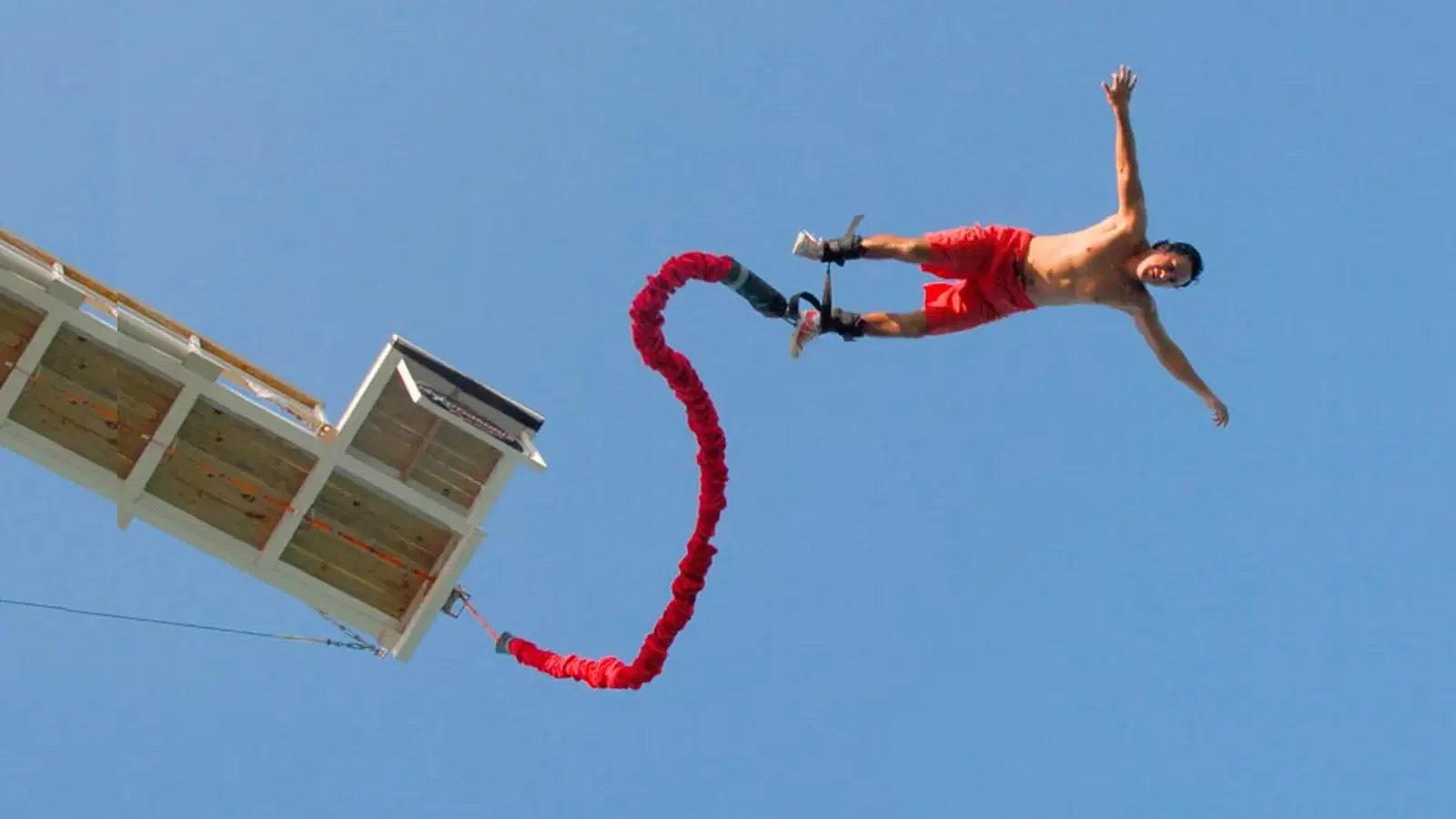
It pairs naturally with our other high-thrill attractions, such as the giant swing and bungee jump.

FAQs on Human Bungee Slingshot Setup

How much space is required to install a human bungee slingshot in India?

A human bungee slingshot requires a compact ground footprint — typically 4 to 8 metres square — for the launch frame and seating unit, plus adequate vertical clearance for the full launch height and recoil arc. Horizontal safety buffer zones around the structure are essential. Final space requirements are confirmed after site and structural assessment.

Can a human bungee slingshot be installed on flat land or existing structures?

Human bungee slingshots are typically installed on purpose-built ground-level frames on flat or near-flat land. In some cases, integration with an existing structure is possible, subject to detailed structural evaluation. A clear and unobstructed vertical and horizontal safety envelope is essential regardless of mounting approach.

What approvals or permissions are required for a human bungee slingshot in India?

There is no single national approval specific to human bungee slingshot installations in India. Projects typically require local municipal permissions, landowner consent, and internal safety approvals. Additional permissions may apply for public spaces, event venues, or government-owned land depending on state regulations.

Is a human bungee slingshot safe to operate under Indian conditions?

Yes, human bungee slingshots are safe to operate in India when designed with conservative elastic system calculations, robust structural frames, and strict operator protocols. Safety depends on proper elastic element specification, redundant restraint systems, routine pre-launch inspections, and trained staff following defined operating procedures.

Can human bungee slingshots operate year-round in Indian weather?

Most human bungee slingshot systems in India can operate for the majority of the year. Operations may pause during heavy rain, high winds, or adverse weather that affects structural stability or rider safety. Operating thresholds and weather guidelines are defined during the planning and handover stage.

What kind of maintenance does a human bungee slingshot require?

Maintenance involves regular inspection of elastic elements, frame structures, seating and restraint systems, and launch control mechanisms. Elastic components require periodic replacement at defined intervals, as fatigue accumulates with each launch cycle. Structural elements are inspected on a scheduled basis for continued integrity.

Who can operate and manage a human bungee slingshot on a daily basis?

Human bungee slingshots are operated by trained on-site staff without requiring a specialised engineering background. Operators are trained in rider briefing, weight checks, seating and restraint fitting, launch sequencing, recoil monitoring, and emergency shutdown procedures — all following a defined operating protocol.

What footfall or capacity can a human bungee slingshot handle per hour?
A human bungee slingshot runs 1–3 riders per launch and typically handles about 12–15 riders per hour, given the winch pull-down, harnessing and release cycle. Duo and trio capsules raise riders per launch. Throughput depends on capsule size and loading/marshalling.
How much revenue can a human bungee slingshot generate?
The slingshot is a compact, showstopper ride charged per seat or per capsule, with high replay value and a crowd-drawing spectacle that suits events, festivals and parks. Its small footprint and premium pricing make it revenue-efficient. Actual returns depend on location, footfall and pricing — we can share indicative models during planning.
How long does it take to install a human bungee slingshot?
A human bungee slingshot usually installs in about 4–6 weeks, depending on the foundation, tower fabrication and site conditions. The final schedule follows a site assessment.
What factors should be considered while planning a human bungee slingshot project in India?

Key planning factors include available clearance height and ground space, structural feasibility, rider throughput targets, staffing capability, elastic system selection, and long-term maintenance planning. The visual prominence of the ride is a significant commercial consideration, as it drives impulse participation from spectators within the park.

Related Aerial Attractions

More activities in Aerial Attractions — engineered for safety, throughput, and long-term operations. Explore other systems in this category built by OXO Planet.
Contact Us

Let’s start the adventure

For project-level discussions, a brief call or WhatsApp conversation helps us understand your requirements faster and respond more accurately.

Say hello

Location

1st floor, C, 2/10, Block B, Mayapuri Industrial Area Phase II, Mayapuri, New Delhi, Delhi, 110064
We operate with a focused project team. For urgent queries, calling us ensures quicker response.