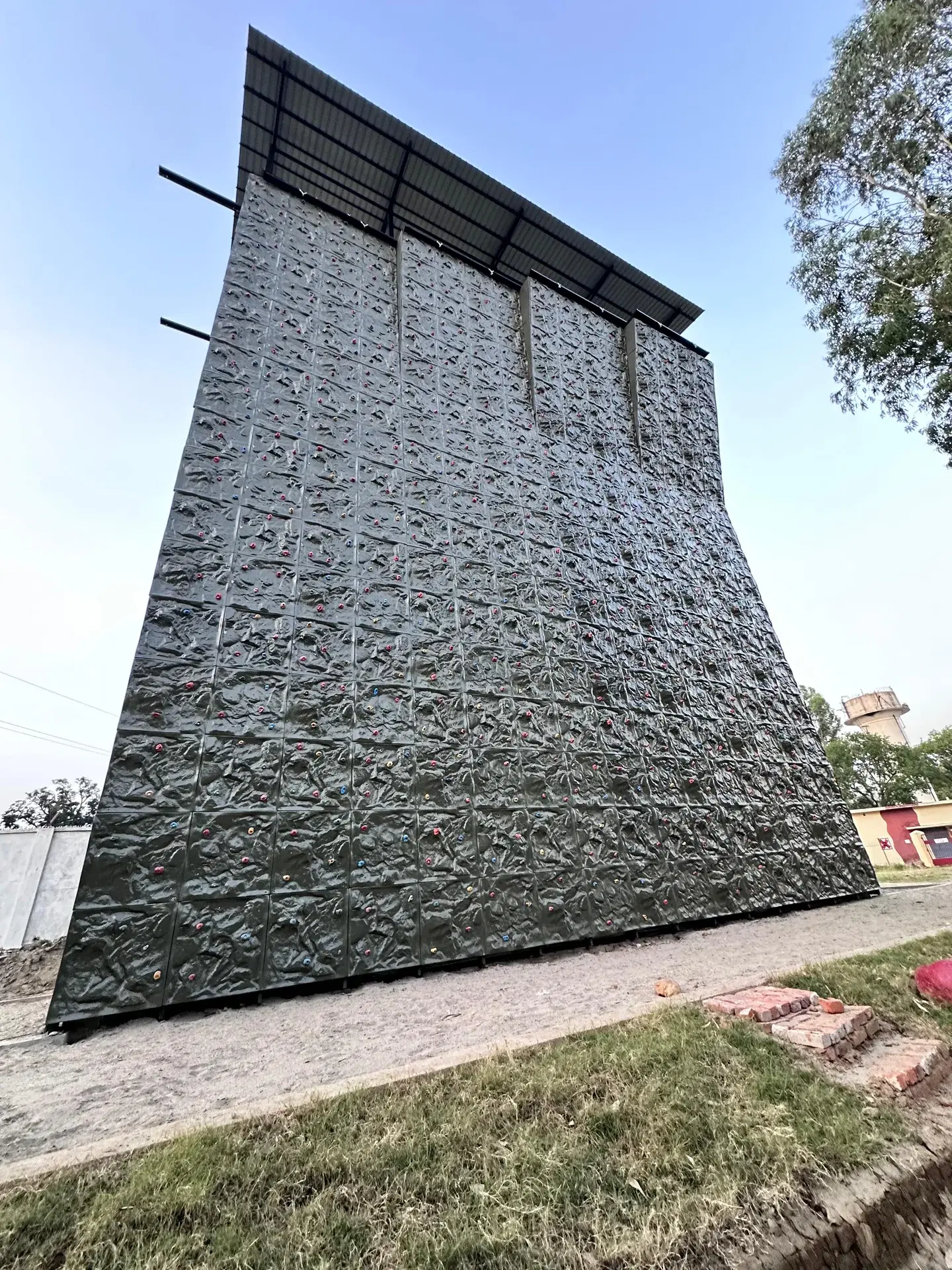
Case Study: An 18 m × 16 m Climbing Wall for a Special Forces unit, Built in 4 Months
18 m high, 16 m wide, 18 climbing lanes, 20 trainees at once — one of India’s largest single-face climbing walls, delivered to a Special Forces unit in four months, through winter, on a rooftop.
Four months, through winter. That is what it took to deliver one of India’s largest single-face climbing walls to the Special Forces: 18 metres high, 16 metres wide, 18 climbing lanes, completed in March 2025.
| Scale | One of India’s largest single-face climbing walls |
| Dimensions | 18 m high × 16 m wide |
| Structure | RCC support pillars rising to roof level, with a steel sub-frame carrying the surface — a rooftop installation |
| Surface | Natural rock-texture FRP panels, 1 m × 1 m |
| Lanes | 18 climbing lanes |
| Training uses | Climbing, rappelling, slithering, tactical drills |
| Concurrent capacity | 20 personnel per session |
| Standards | IS 456 concrete · IS 800 steel |
| Client | the Special Forces, Indian Army |
| Timeline | 4 months, completed March 2025 — a winter build |
A Special Forces unit trains its vertical skills as a syllabus — climbing, rappelling, slithering, tactical movement — and a syllabus needs throughput. One uninterrupted 16-metre-wide face lets instructors run 18 lanes side by side and put 20 personnel on the wall in a single session, watching all of them at once. And 18 metres of height is not ambition for its own sake: it replicates operational rope lengths, so a trainee finishes a full descent, not a rehearsal of one.
The scale is stated precisely for a reason: this is a single-face wall. Multi-face towers distribute area around a structure; this wall concentrates it in one training plane — a different tool, engineered for a different job.
The unit needed the wall in service by March; the calendar offered winter — and the site offered a rooftop inside a restricted defence zone, not open ground. Two design decisions made the schedule survivable. First, the primary structure is RCC — support pillars cast to IS 456, rising to roof level — with a steel sub-frame to IS 800 carrying the climbing surface, so civil and steel work could proceed in parallel rather than in series. Second, the surface is modular: FRP rock-texture panels of 1 m × 1 m, manufactured off-site while the structure rose, then fixed to the sub-frame — and individually replaceable for the life of the wall.
The finished face carries the unit’s full vertical curriculum: climbing across 18 lanes, rappelling and slithering from the 18 m crown, and tactical drills that chain them together. Structural compliance spans IS 456 and IS 800 — the same standards discipline OXO Planet applies on public installations (where climbing structures also reference EN 12572), applied here to a wall most of the public will never see. See the full Special Forces project page and our work for the defence sector.
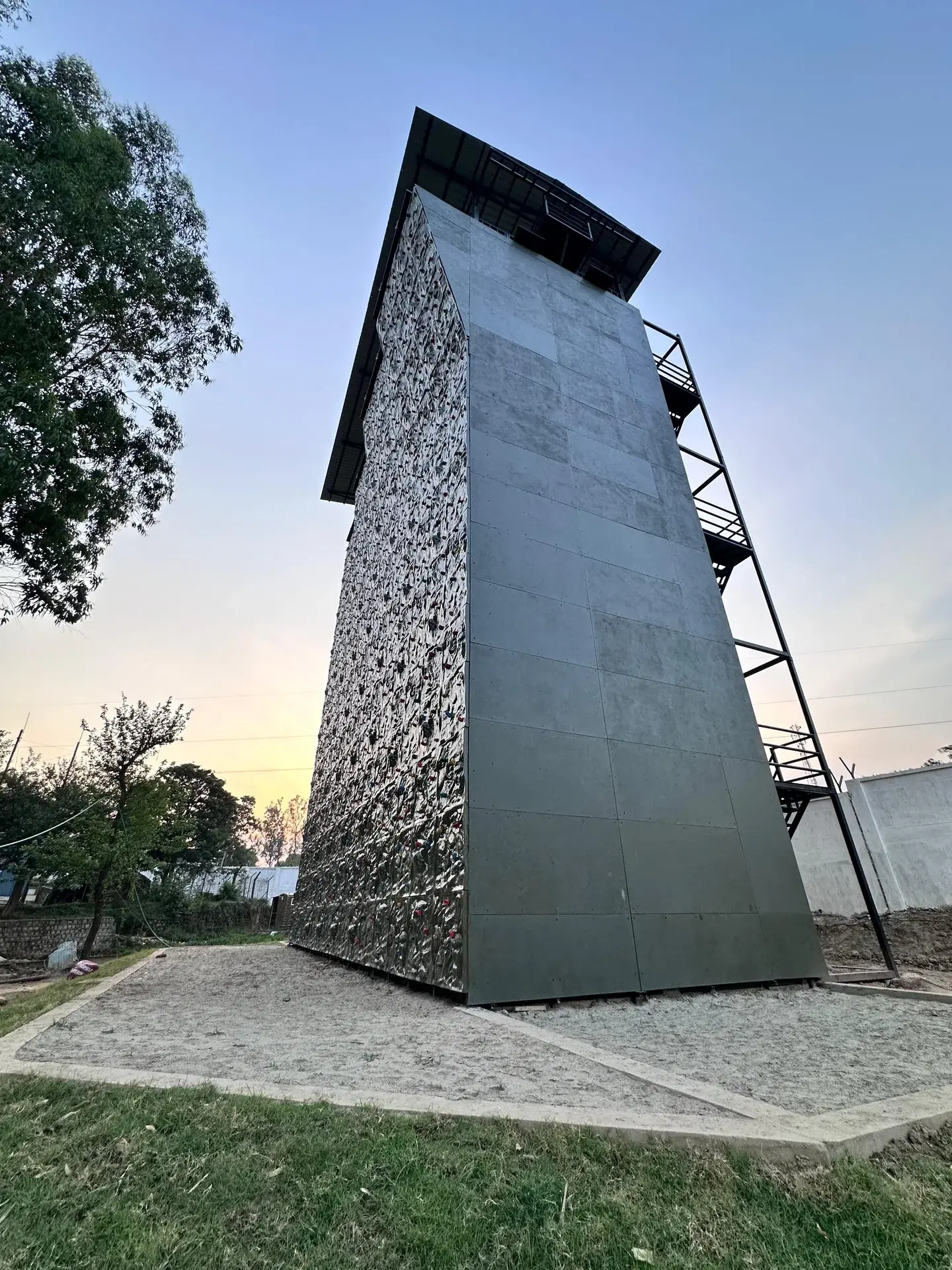
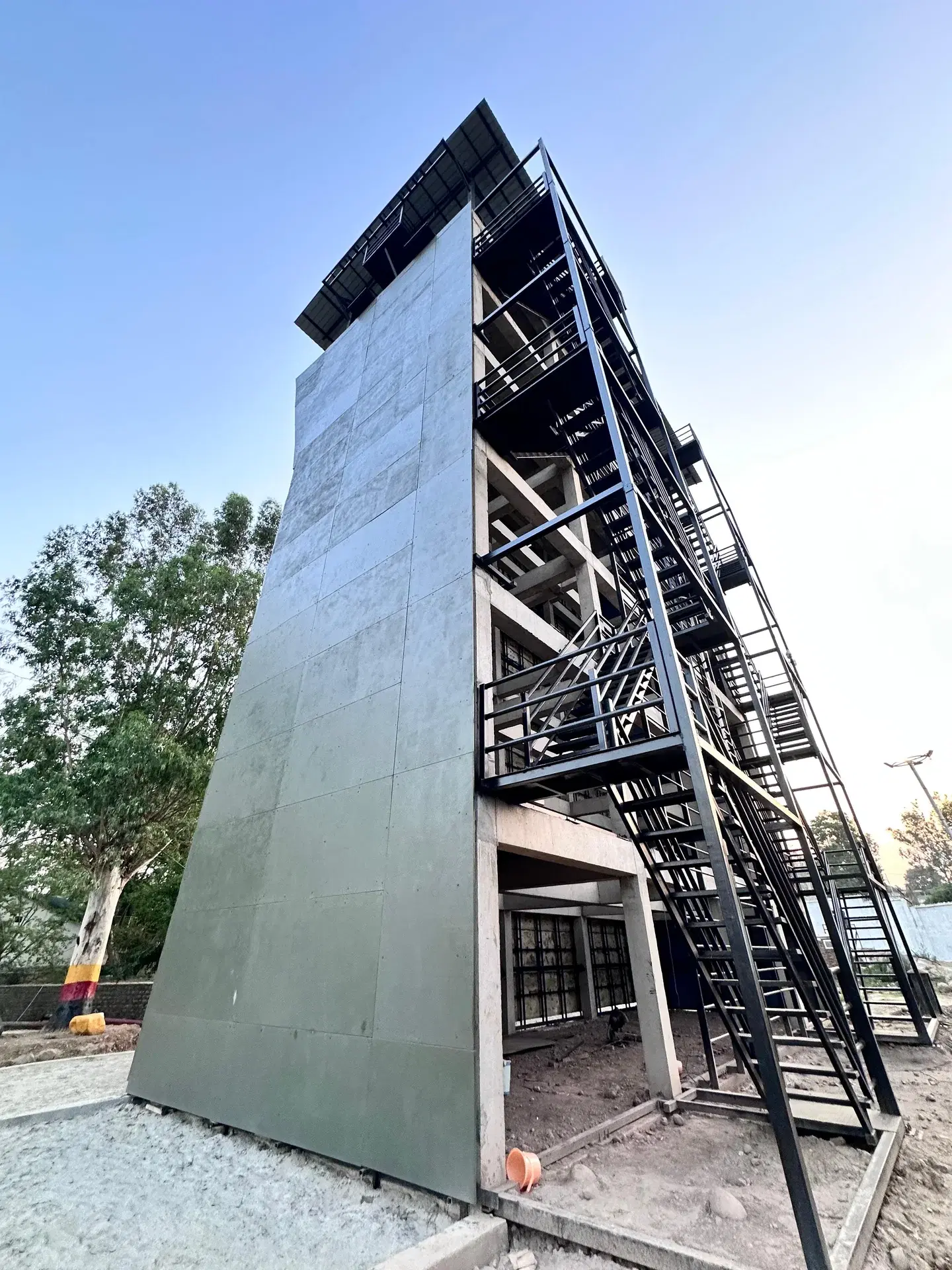
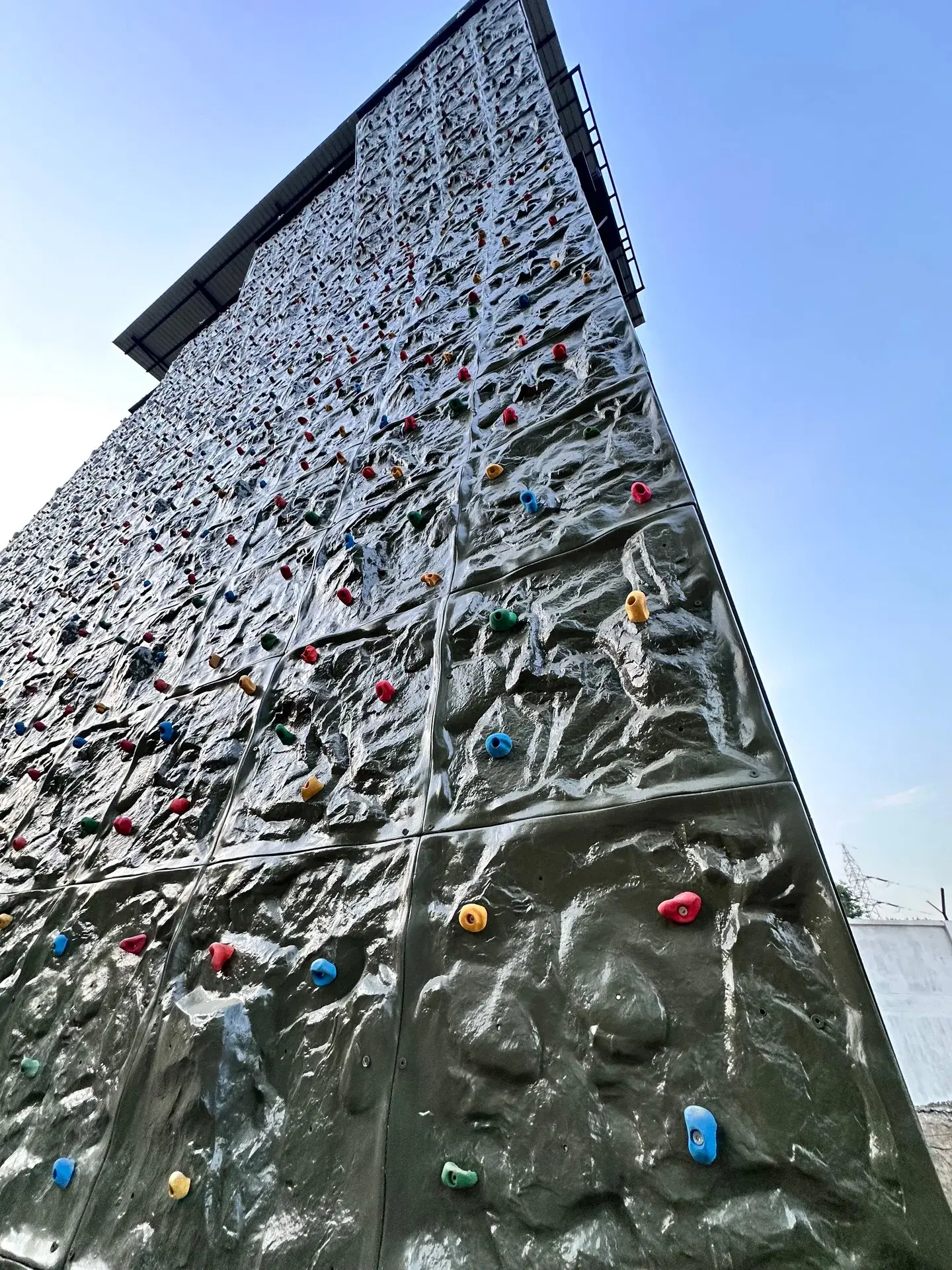
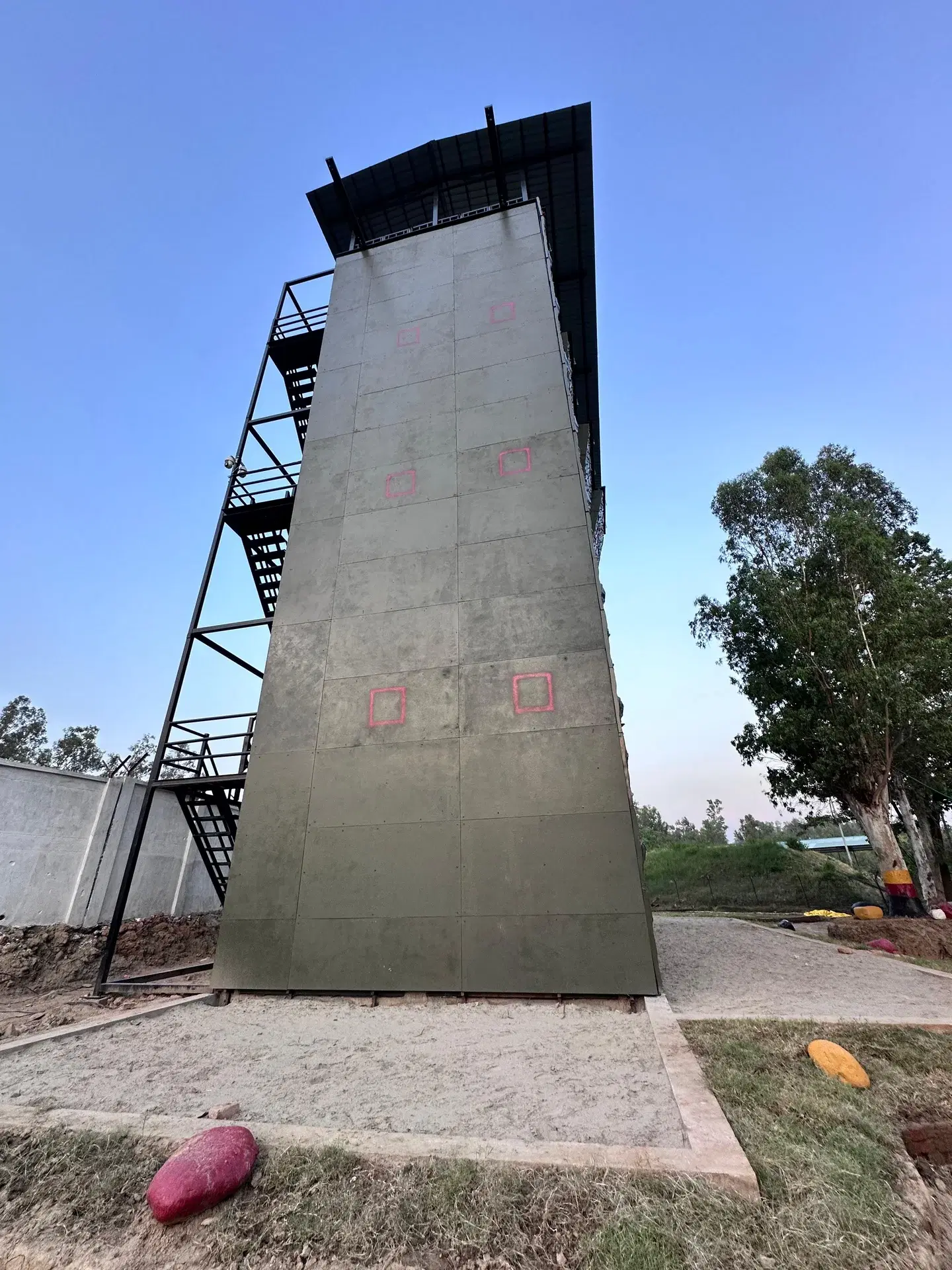
Speed and standards are usually presented as a trade-off. This project is a useful counter-example: four months, winter included, on a rooftop in a restricted zone, at a scale few walls in the country match — because the speed was engineered in (parallel RCC and steel, modular off-site surface), not extracted from corners. If you are evaluating vendors on timeline promises, ask how the schedule is achieved — our checklist for choosing an adventure infrastructure company puts that question in context.
Contact Us
Let’s start the adventure
For project-level discussions, a brief call or WhatsApp conversation helps us understand your requirements faster and respond more accurately.