Adventure Park Setup Cost in India (2026): Activity-by-Activity Price List
What every adventure activity costs to build in India in 2026 — ziplines ₹15–45 lakh, ropes courses ₹20–70 lakh, climbing walls from ₹9.8 lakh, trampoline parks ₹1–4 crore — plus design, AMC and training rates.
A single adventure activity can start at less than ₹10 lakh. If you’re planning a small outdoor park with around three activities, you could be looking at an investment of ₹45 lakh to ₹90 lakh. For a full-fledged indoor adventure park, the budget could range from ₹1 crore to ₹4 crore.
These are indicative costs for 2026, based on OXO Planet’s experience delivering projects across 85+ sites in India and Nepal.
All figures exclude GST, civil work and site development unless stated. Final scope always follows a site assessment.
| Inflatables (per unit) | ₹1–5 lakh |
| Rope net wall | ₹4–12 lakh |
| Tyre net wall | ₹4–12 lakh |
| Fun wall for kids | ₹5–12 lakh |
| Quick jump (device) | from ~₹8 lakh |
| Climbing wall | from ₹9.8 lakh |
| Giant swing | ₹12–27 lakh |
| Bouldering wall | ₹12–50 lakh |
| Rappelling & slithering | ₹8–20 lakh |
| Zipline | ₹15–45 lakh+ |
| Sky cycle | ₹15–24 lakh |
| Zip surfing | ₹15–24 lakh |
| Obstacle course | ₹15–30 lakh (ninja: to ₹1 crore+) |
| Roller coaster zipline | ~₹24 lakh (120 m) |
| Ropes course | ₹20–70 lakh |
| Paintball arena | ₹20–60 lakh |
| Soft play area | ₹25 lakh–₹1 crore+ |
| Canopy walk / Burma bridge | ₹25 lakh–1.5 crore+ |
| Outdoor net play area | ₹30–80 lakh |
| ATV track | ₹35 lakh–1.5 crore+ |
| Multi-activity tower | ₹40 lakh–1.5 crore |
| Laser tag arena | ₹45 lakh–1.4 crore+ |
| Trampoline park | ₹1–4 crore+ |
| Go-kart track | ₹1.5–7 crore+ |
| Bungee · slingshot · glass bridge | Site-specific — on request |
A zipline can cost anywhere from ₹15 lakh to ₹45 lakh or more, depending largely on its length, terrain and the kind of experience you want to create. A shorter recreational line (50–150 m) may cost around ₹15–25 lakh, while a medium scenic span (150–400 m) could range between ₹25–45 lakh. For high-speed ziplines stretching beyond 400 m, the investment can start at ₹45 lakh and go upwards.
There’s also an interesting option for locations without a natural slope. A roller coaster zipline, which follows a curved track and works even on flat land, costs approximately ₹24 lakh for a 120 m installation. As a general estimate, you can expect to spend around ₹20,000–25,000 per metre installed.
The cost of a climbing wall depends on its size and whether it needs an independent supporting structure. A 12 × 30 ft wall attached to an existing structure may cost around ₹9.8–14.8 lakh. If you’re planning a larger, freestanding 20 × 50 ft wall, the investment could rise to ₹28–40 lakh.
Bouldering walls offer another option, with compact setups costing around ₹12–25 lakh and more advanced terrain ranging from ₹25–50 lakh. For younger participants, a kids’ fun climbing wall can start at just ₹5 lakh.
If you’re considering a ropes or obstacle course, the budget will largely depend on how many challenges you want to include and how elaborate the structure needs to be. A 10–15 obstacle low-and-high ropes course could cost between ₹20–50 lakh, while a larger course with 20–30 obstacles may require ₹30–70 lakh. Premium, custom-designed installations can go beyond ₹50 lakh.
For simpler setups, a ground obstacle course may cost around ₹15–30 lakh. If you’re looking for something more demanding, competition-grade ninja courses can require an investment of ₹50 lakh to ₹1 crore or more.
Indoor adventure parks usually need a bigger investment, not just for the activities but also for the space and infrastructure that support them. A trampoline park of 2,000–3,000 sq ft may cost around ₹1–1.8 crore. Larger facilities above 5,000 sq ft can go up to ₹1.8–4 crore or more. Depending on the scale, this works out to approximately ₹3,500–9,000 per sq ft.
Other indoor attractions have their own price ranges. A compact soft play area may cost ₹25–50 lakh, while a compact laser tag setup could require ₹45–70 lakh. For a larger, free-roam laser tag experience, the investment can exceed ₹1.4 crore.
One thing worth remembering: the activity installation is only part of the overall budget. HVAC, civil work and interior development will add to the cost of any indoor park.
The activity tables are the hardware. These are OXO Planet’s own published service rates (2026):
| Feasibility & business consulting | 1–5% of project cost (minimum ₹2 lakh) |
| Design & planning, standalone | ₹2–5 lakh per acre, by scope |
| Annual maintenance contract (AMC) | 5–8% of project cost per year |
| Inspections & safety audits | Per site, by activity — ropes courses ₹10,000 per element, ziplines ₹25,000 per line |
| Operator training | Included in OXO project price; standalone from ₹10,000/day |
Budget AMC from day one: an adventure park is a safety-critical asset, and 5–8% a year is what keeps it inspectable, insurable and open.
Three indicative compositions, summed from the published ranges (land, civil work and GST extra):
| Resort starter (3 activities): short zipline + standard ropes course + attached climbing wall | ₹45–90 lakh |
| Destination park (4–5 activities): medium scenic zipline + canopy walk + giant swing + multi-level ropes course | ₹90 lakh–2 crore |
| Indoor FEC anchor: trampoline park + soft play + laser tag | ₹1.7–4.4 crore (before HVAC/interiors) |
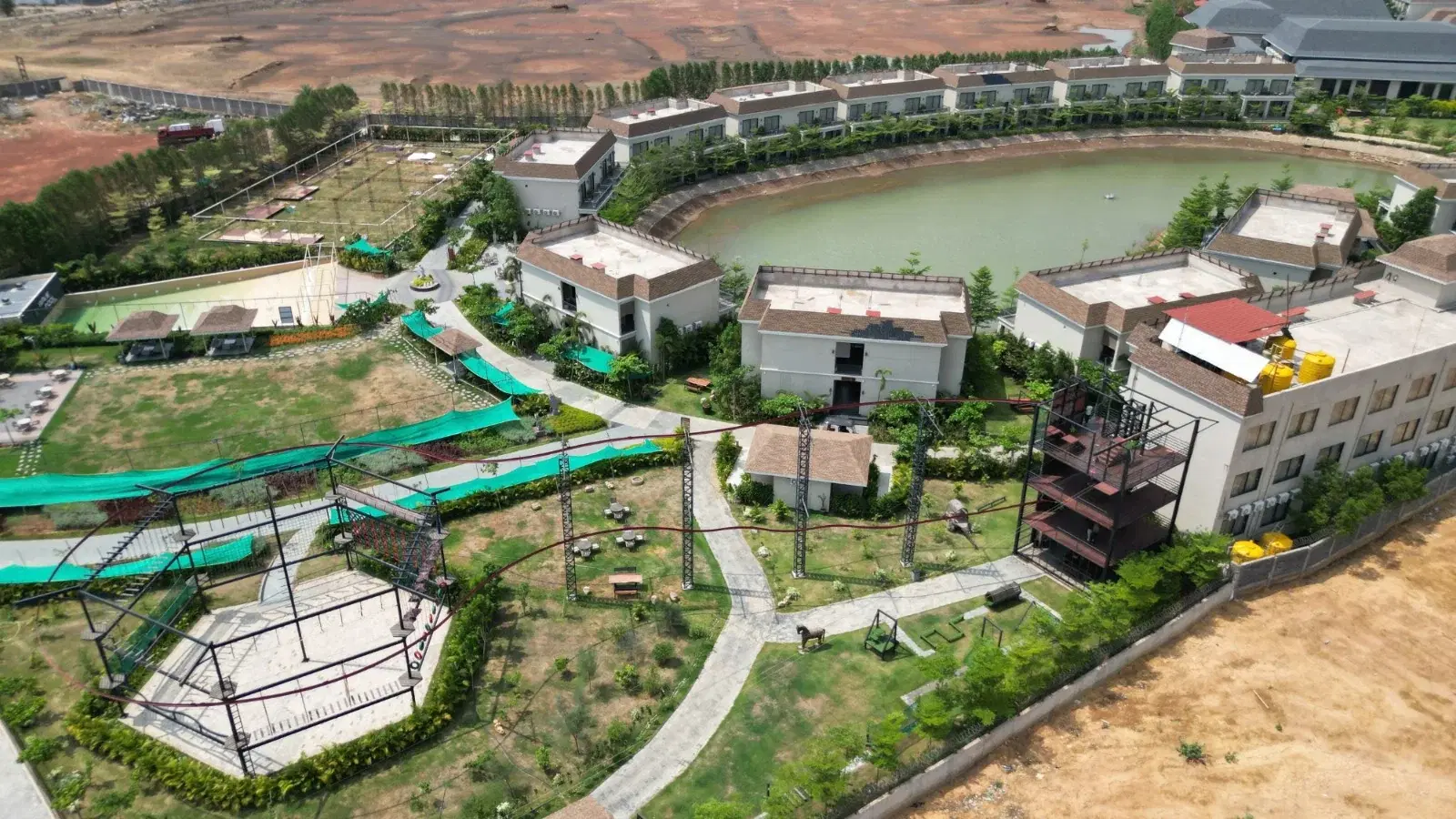
The resort starter is the pattern behind our Maira Resort build — nine activities on 1.2 acres, delivered in three months.
Here are some operating figures from OXO installations to help you understand the revenue potential. A roller coaster zipline on a roughly 100 m track can handle about 20 riders per hour at ₹400 per ride. A multi-activity tower can serve 100–500 visitors a day, with individual tickets priced at ₹100–500 and combo passes starting at ₹2,000. Actual revenue will depend on footfall, season and day-to-day operations. A feasibility study, typically costing 1–5% of the project cost, helps estimate these numbers before you invest.
For aerial attractions, span and height make the biggest difference. A zipline’s cost depends more on its length and elevation drop than on the hardware grade. Terrain and site access also affect civil costs, especially on hillsides where materials may need to be carried by hand. Throughput targets determine the size of the structure, including the number of lanes, elements and steel required. Safety and compliance are part of the cost too: OXO builds include IS 456/IS 800 engineering, load testing and certified components. These aren’t optional extras.
Contact Us
Let’s start the adventure
For project-level discussions, a brief call or WhatsApp conversation helps us understand your requirements faster and respond more accurately.