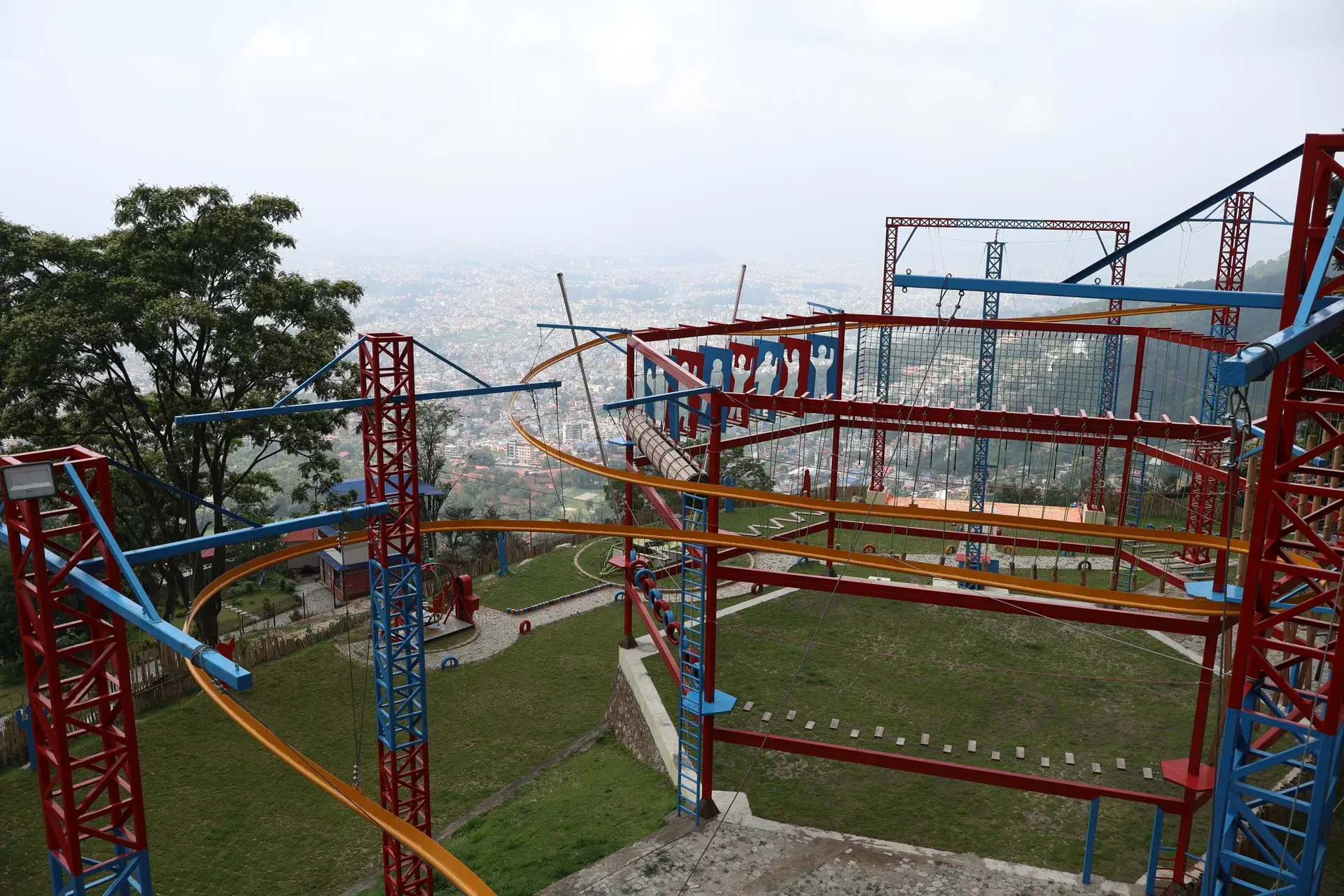
How to Start an Adventure Park in India: Cost, Land & Setup Guide
Planning to start an adventure park in India? Learn about land requirements, setup cost, activity selection, safety systems, permissions, timeline, and turnkey execution with Oxo Planet.
Written by Mohit Gupta, Founder & Director, OXO Planet. Mohit has been designing and delivering adventure infrastructure across India since 2009.
Published: June 2026 · Last Updated: June 2026
Most adventure park projects in India fail before the first visitor arrives. Not because the activities aren't exciting — but because the planning was done backwards: equipment first, operations last. After delivering adventure parks across 25 Indian states & UTs, here is what actually determines whether an adventure park succeeds or struggles.
This guide explains how to plan an adventure park setup in India, including cost, land requirement, activity selection, safety, permissions, and execution timeline. Industry coverage has tracked adventure attractions emerging as revenue drivers for resorts and destinations (see Free Press Journal and Business Standard).
Adventure and recreation businesses are growing because Indian customers are looking for more experience-based leisure activities. Families, schools, corporates, tourists, and young adults are increasingly choosing outdoor activities over only food, shopping, or passive entertainment.
For landowners and developers, adventure parks can convert unused land into a revenue-generating attraction. For resorts, they increase guest engagement and length of stay. For schools and institutions, they support physical development, confidence, teamwork, and outdoor learning.
A well-designed adventure park can work as a standalone destination or as an additional revenue centre within an existing property.
The land requirement depends on the number of activities, visitor capacity, parking, circulation, landscaping, safety zones, and future expansion plan.
| Park Type | Approx. Area | Suitable For |
|---|---|---|
| Compact adventure zone | 10,000–25,000 sq ft | Schools, resorts, farm stays |
| Mid-size adventure park | 0.5–2 acres | Commercial parks, townships, resorts |
| Large destination park | 3–10+ acres | Tourism projects, government sites, large investors |
A small adventure zone can start with selected activities such as climbing wall, low rope course, kids obstacle course, zipline, and net play. A larger destination park may include multiple zones, food court, ticketing area, parking, washrooms, shaded seating, landscaping, and support infrastructure.
As a reference, the Sreenidhi International School campus in Hyderabad — one of India’s largest in-school adventure setups — spans approximately 1.2 acres and includes 8 activities designed for student age groups from 6 to 18.
The right activity mix depends on the target audience, land size, budget, location, and business model.
| Activity | Best For | Investment Level |
|---|---|---|
| Zipline | Resorts, tourism sites, destination parks | Medium |
| Rope Course | Adventure parks, schools, resorts | Medium to High |
| Climbing Wall | Schools, malls, parks, resorts | Medium |
| Multi-Activity Tower | High-impact commercial attractions | High |
| Kids Obstacle Course | Family parks and schools | Low to Medium |
| Outdoor Net Play | Resorts, children's zones, public parks | Medium |
| Pump Track | Townships, resorts, sports parks | Medium to High |
| Sky Cycle | Tourist sites and destination parks | Medium |
| Quick Jump | Adventure parks and tower-based setups | Medium to High |
For most new projects, it is better to start with a balanced mix of family-friendly, youth-focused, and high-thrill activities instead of installing only extreme attractions. This helps attract a wider audience and improves daily usability.
A practical first-phase activity mix may include:
- Zipline
- Rope course
- Climbing wall
- Kids obstacle course
- Net play area
- Sky cycle or quick jump
- Seating and viewing zones
The choice between an indoor and outdoor adventure park depends on location, climate, target audience, and investment capacity.
Outdoor adventure parks work best where land is available, natural terrain adds value, and the location attracts footfall from tourism, schools, or residential catchments. They support high-thrill activities like zipline, sky cycle, and ropes course that require open space and height.
Indoor adventure parks — typically in malls, warehouses, or built structures — work well in urban markets where land cost is high, year-round operations are needed regardless of monsoon, and the audience is primarily families and children. Trampoline parks, soft play, climbing walls, and obstacle courses are the most common indoor formats.
Many of OXO Planet's resort and school clients combine both: indoor soft play or climbing walls for year-round use, and outdoor adventure zones for seasonal or event-based high-capacity footfall.
- Small activity zone₹15 lakh – ₹50 lakh
- Mid-size adventure park₹50 lakh – ₹2.5 crore
- Large destination park₹2.5 crore – ₹10 crore+
- Final cost depends on site conditions, height, span, materials and finish quality.
- Foundation, civil work and safety gear are often underestimated — plan for them upfront.
- Indicative ranges only. Share your site for a custom BOQ.
Based on OXO Planet projects delivered across India, a compact school adventure zone with zipline, climbing wall, and obstacle course typically falls between ₹25–40 lakh, while a resort setup with 8–10 activities runs ₹80 lakh to ₹1.5 crore depending on terrain, civil requirements, and span.
The cost ranges above are broad planning brackets. The actual investment depends on site conditions, height, span, material specifications, foundation requirements, safety gear, access roads, utilities, and finish quality.
Major cost components include:
- Concept design and planning
- Engineering and structural design
- Fabrication
- Adventure equipment
- Safety gear
- Civil foundations
- Installation
- Testing and inspection
- Landscaping and pathways
- Ticketing, fencing, signage, lighting, and utilities
- Staff training and maintenance planning
A common mistake is calculating only the activity equipment cost. A commercially successful adventure park also needs visitor flow planning, safety zones, operational areas, staff movement, rescue access, and maintenance provisions.
Share your site details with Oxo Planet and get expert guidance on planning, costing and execution.
Safety is the most important part of adventure park development. Every activity must be designed with proper structural strength, fall protection, operating procedures, inspection systems, and trained supervision.
Important safety considerations include:
- Structural stability
- Proper foundation design
- Certified safety gear
- Fall arrest or belay systems
- Load calculations
- Rescue planning
- Staff training
- Daily inspection checklist
- Periodic maintenance
- Clear user instructions
- Age, height, and weight restrictions
- Emergency access
For activities such as zipline, rope course, sky cycle, quick jump, climbing wall, and multi-activity towers, engineering should not be compromised. Poor design or low-quality fabrication can create serious operational and safety risks.
Oxo Planet follows a safety-first approach with site-specific design, engineered structures, suitable materials, installation supervision, and maintenance guidance.
Permissions for an adventure park may vary depending on the location, land type, project size, local authority rules, and whether the site is private, institutional, forest, tourism, municipal, or commercial land.
Common areas to review include:
- Land-use permission
- Local municipal or panchayat approval
- Building or structural approval where applicable
- Fire and emergency access requirements
- Electrical safety
- Insurance
- Environmental or forest-related permissions if applicable
- Public liability considerations
- Signage and visitor safety instructions
Because rules vary by state and local authority, investors should verify permissions with local consultants, architects, legal advisors, and relevant government departments before execution.
1. Site Evaluation
Study the land — area, slope, soil, trees, access road, visibility, nearby audience, parking, drainage, and safety constraints.
2. Business & Audience Planning
Define the target audience — families, tourists, school groups, resort guests, corporate groups, defence training. This drives ticket pricing, activity selection, safety systems, staffing, and marketing.
3. Concept Design
Map zoning, activity placement, visitor movement, entry/exit, waiting zones, viewing areas, emergency access, and future expansion.
4. Budget & BOQ
Detailed BOQ after concept approval — helps compare costs, control scope, and avoid hidden expenses.
5. Engineering & Fabrication
Convert approved design into structural drawings, fabrication details, material specifications, and production planning.
6. Installation
Foundation work, structure erection, activity setup, safety system installation, finishing, signage, and site coordination.
7. Testing, Training & Handover
Testing, inspection, staff training, rescue procedure briefing, and handover documentation before opening.
- Site study3–7 days
- Concept design1–2 weeks
- Costing and BOQ1 week
- Fabrication3–8 weeks
- Installation2–8 weeks
- Testing and handover3–7 days
- A compact setup may be completed faster, while a large destination park with multiple activities, civil work, landscaping, utilities, and approvals may take several months.
- As a benchmark, OXO Planet typically delivers fabrication for a mid-size 8-activity park in 4–6 weeks and completes installation in 3–4 weeks, with full handover approximately 3–4 months from design sign-off, subject to site readiness and civil work completion.
Many adventure park projects face problems because planning is done only around attractions, not operations.
- Choosing activities without studying the site: Slope, soil type, tree cover, and access paths directly affect foundation cost and structural design. We have seen projects where a zipline had to be completely relocated after civil work began because the landing zone had unstable soil.
- Ignoring safety buffer zones: Activities like zipline and quick jump require clear landing and runout zones that are often missing from vendor drawings. A zipline landing platform positioned too close to a boundary wall requires expensive redesign after fabrication.
- Underestimating civil and foundation costs: Foundations, pathways, drainage, and electrical work often account for 25–40% of total project cost. Projects that budget only for equipment routinely run over.
- Using poor-quality materials: Galvanised steel specifications, rope grades, and harness certifications vary widely. Low-cost substitutions fail within one to two monsoon cycles and create serious liability.
- No rescue planning: Every activity above 2 metres needs a documented rescue procedure and trained staff. This is non-negotiable and must be planned before opening day, not after.
- Selecting vendors on lowest price alone: The cheapest quote rarely includes engineering drawings, load calculations, testing, or training. Total cost of ownership — including maintenance, insurance, and safety audits — should drive vendor selection.
Get turnkey support for design, engineering, fabrication, installation, safety systems and maintenance planning.
Found this useful? Share it with someone planning an adventure park or recreational facility in India.
OXO Planet is a member of the Indian Association of Amusement Parks and Industries (IAAPI).Contact Us
Let’s start the adventure
For project-level discussions, a brief call or WhatsApp conversation helps us understand your requirements faster and respond more accurately.